




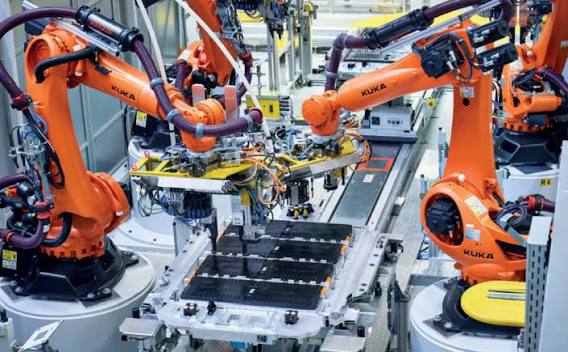
Morocco could host a new industrial facility dedicated to battery manufacturing as part of efforts to strengthen economic cooperation with Egypt. Investors from both countries are currently studying the possibility of developing a battery plant, according to information released on October 2, 2026, by the Egyptian-Moroccan Business Council. The initiative comes as Morocco accelerates the development of an integrated ecosystem covering electric vehicles, battery materials and industrial components.
The project is part of an industrial dynamic already underway. At Jorf Lasfar, COBCO is developing a platform dedicated to active materials for electric vehicle batteries, with a total announced investment of MAD 20 billion on a site covering more than 238 hectares. The complex is expected to produce NMC precursors for cathode manufacturing, as well as LFP materials, with targeted production capacities of 120,000 tonnes per year of NMC precursors and 60,000 tonnes of LFP cathodes.
These investments are gradually expanding Morocco’s industrial base beyond vehicle assembly. The country is increasingly developing upstream activities involving materials, chemicals, batteries, power electronics and electrical systems.
A value chain with multiple opportunities
The development of the battery value chain is also generating new demand in chemicals, metallurgy, electrical equipment, electronics, industrial automation, logistics and materials processing. An Egyptian industrial investment could complement projects already launched by international groups and create new opportunities for industrial cooperation between the two economies.
For Egyptian companies, Morocco’s industrial platform provides access to European and African markets, supported by the Kingdom’s port infrastructure and network of trade agreements. For Moroccan manufacturers, closer cooperation with Egypt could facilitate access to a major market and contribute to the development of new industrial supply chains between the two countries.
At this stage, the project announced on October 2, 2026 remains under study. No investment amount, precise location or production capacity has yet been disclosed. Its significance nevertheless lies in the growing diversification of investors interested in Morocco’s energy and industrial value chains.
Following the automotive sector, battery-related materials and technologies are emerging as a new area of industrial cooperation between Morocco and Egypt, and more broadly between African and Arab economies, as electric mobility accelerates and new industrial value chains take shape.