
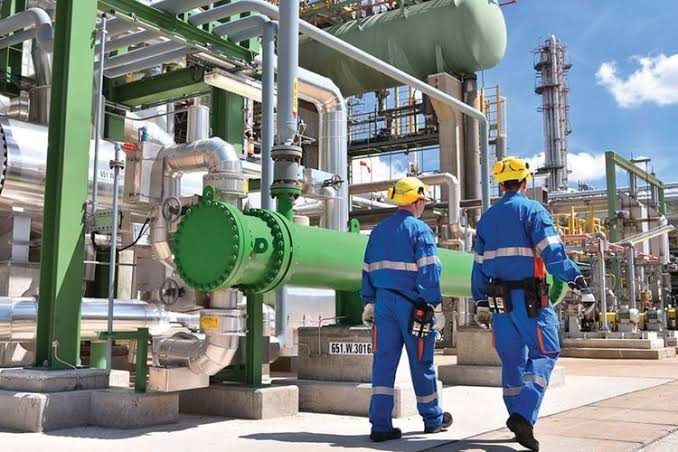
Morocco is steadily positioning itself to become one of the world’s leading producers of green ammonia. Thanks to its exceptional renewable energy resources, its global leadership in the phosphate industry, and its strategic proximity to Europe, the Kingdom possesses all the assets needed to develop a strategic industry capable of transforming its economy over the coming decades.
Green ammonia is produced from green hydrogen generated through the electrolysis of water using electricity from solar and wind power. It is considered one of the cornerstones of the global energy transition and decarbonization strategy. Green ammonia is essential for manufacturing low-carbon fertilizers, serves as a promising fuel for the maritime sector, enables large-scale energy storage, and supports the development of clean chemical industries. Global demand is expected to rise sharply over the coming decades, driven by the carbon neutrality commitments of the European Union and the world’s major industrial economies.
Morocco’s greatest strength lies in its exceptional natural resources. The country enjoys more than 3,000 hours of sunshine each year, vast areas with strong and consistent wind conditions, and direct access to the Atlantic Ocean, providing ideal conditions for seawater desalination, a key component in green hydrogen production. These advantages place Morocco among the world’s most competitive locations for large-scale green ammonia production.
At the heart of this strategy is OCP Group, the world’s leading phosphate producer and one of the largest fertilizer manufacturers globally. As part of its US$13 billion investment program for the 2023–2027 period, the Group plans to produce 1 million tonnes of green ammonia annually by 2027, increasing production to 3 million tonnes per year by 2032. This ambitious program aims to gradually replace fossil-based ammonia imports, manufacture fully decarbonized fertilizers, and achieve carbon neutrality across OCP’s industrial operations.
To support these ambitions, OCP is developing a fully integrated industrial ecosystem powered by 5 GW of renewable energy by 2027, expanding to 13 GW by 2032. The Group is also investing in seawater desalination facilities with a total annual capacity exceeding 560 million cubic meters. In parallel, OCP plans to increase its fertilizer production capacity from 15 million to 20 million tonnes annually, while creating an industrial ecosystem of nearly 600 companies, capable of generating approximately 25,000 direct and indirect jobs.
Morocco’s ambitions extend far beyond OCP’s own requirements. In 2025, the Moroccan government approved the first wave of green hydrogen projects representing MAD 319 billion (more than US$32 billion) in investments. These projects aim to produce green ammonia, green steel, and sustainable industrial fuels for both domestic consumption and export to European markets.
The economic impact of this emerging industry is expected to be substantial. It will help reduce Morocco’s energy import bill by lowering dependence on imported ammonia and natural gas, strengthen the competitiveness of the country’s fertilizer industry, attract significant foreign direct investment, modernize port infrastructure, and create thousands of highly skilled jobs in engineering, chemistry, renewable energy, logistics, and advanced manufacturing.
The development of green ammonia will also stimulate the emergence of new high-value industrial sectors, including synthetic fuels, green steel, battery materials, low-carbon glass, and green aluminum. As a result, green ammonia is set to become a major driver of Morocco’s industrial diversification and technological upgrading.
Morocco also enjoys a decisive geographical advantage. Located only a few days by sea from Europe’s main ports, the Kingdom is ideally positioned to supply one of the world’s fastest-growing clean energy markets. As the European Union seeks to secure imports of green hydrogen and its derivatives to accelerate its energy transition, Morocco stands out as one of the closest, most reliable, and most competitive suppliers.
Ultimately, green ammonia is far more than an energy project—it represents a comprehensive national strategy for industrial transformation. It combines energy security, industrialization, technological innovation, job creation, export growth, and investment attraction into a single long-term vision. By leveraging its abundant renewable resources, world-leading phosphate industry, and ambitious industrial strategy, Morocco is positioning itself as one of the future global hubs for green hydrogen and green ammonia production, and as a key partner in the worldwide transition toward a low-carbon economy.
If you wish, I can also Produce a native English business journalism version, written in the style of the Financial Times, Reuters, or Bloomberg, making it even more suitable for publication in an international economic magazine.