




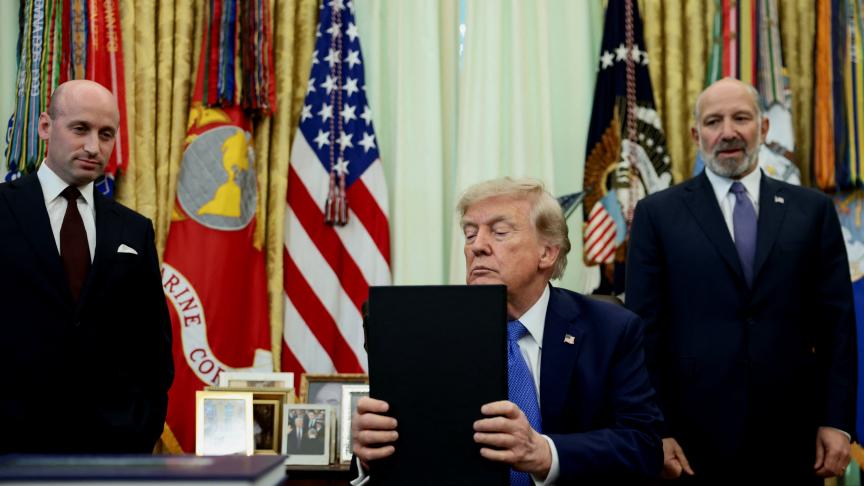

U.S. President Donald Trump signed two executive orders on Thursday aimed at curbing so-called “birth tourism” as part of his administration’s efforts to revise rules governing birthright citizenship in the United States.
The move comes just over a month after the U.S. Supreme Court struck down a previous executive order issued by Trump that sought to restrict automatic citizenship for children born in the United States to parents living in the country illegally.
“The Supreme Court made a very unfortunate decision regarding birthright citizenship… But we are making adjustments,” Trump said during a signing ceremony in the Oval Office at the White House.
The Court had ruled that children born in the United States to parents who are “unlawfully or temporarily present” are entitled to U.S. citizenship under the Citizenship Clause of the 14th Amendment to the Constitution.
Trump expressed confidence that the newly signed measures, which introduce targeted changes to the application of birthright citizenship, would withstand constitutional scrutiny.
According to White House Deputy Chief of Staff for Policy and Homeland Security Adviser Stephen Miller, the first executive order specifically targets commercial birth tourism, which he described as “one of the most serious and blatant abuses” of U.S. immigration law.
Miller also said the administration is expanding the categories of individuals who would not qualify for birthright citizenship, including members of terrorist organizations and individuals acting on behalf of foreign governments.
The second executive order broadens the categories of people whose U.S.-born children may not automatically be recognized as American citizens. It includes provisions covering children of certain foreign government employees and cases involving commercial arrangements intended to obtain U.S. citizenship through birth.
The practical impact of the new measures remains uncertain, as existing restrictions already apply in some circumstances and the constitutionality of the latest executive orders could once again face legal challenges in U.S. courts.