




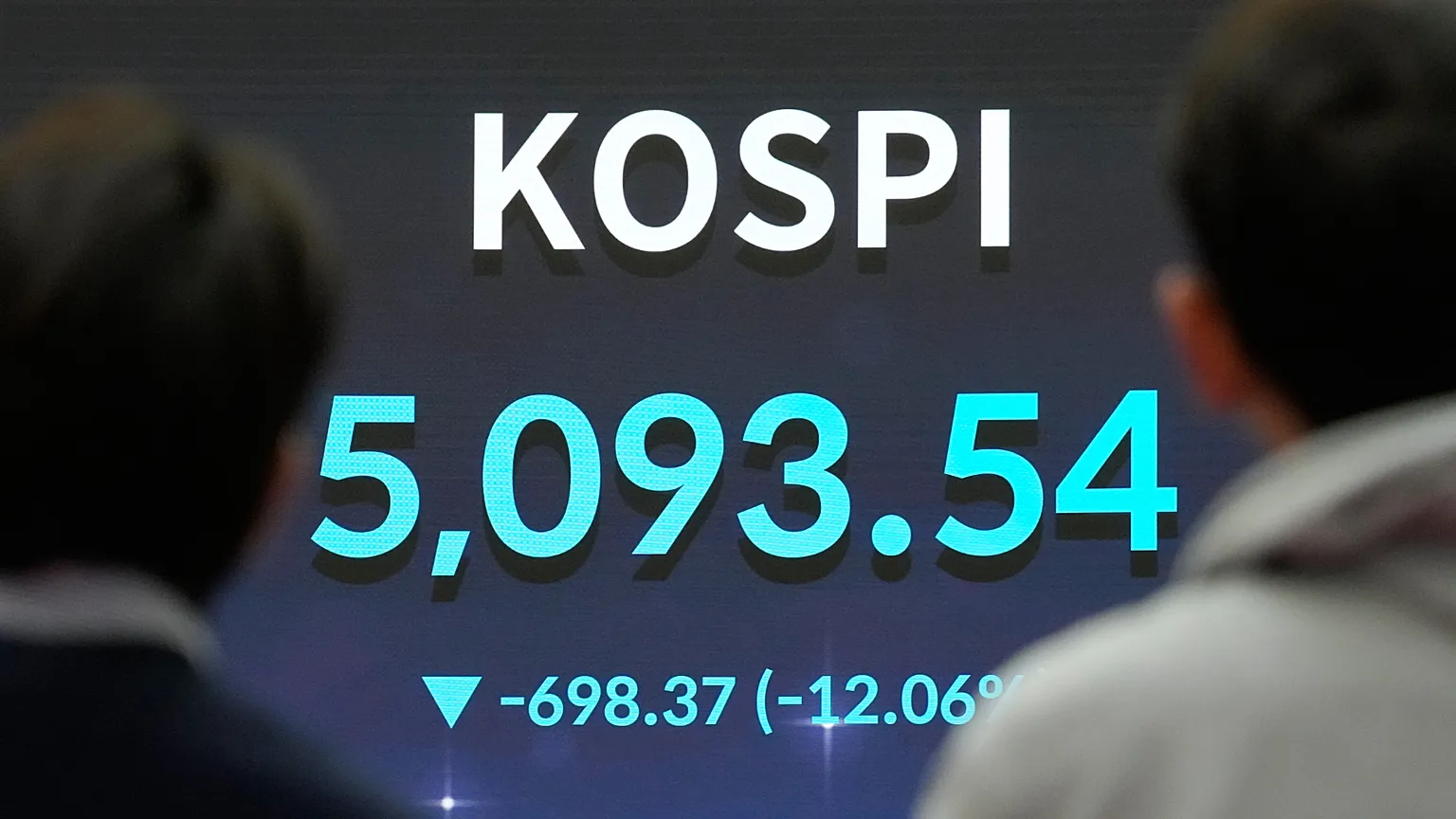

Asian stock markets fell sharply on Wednesday, shaken by escalating tensions in the Middle East and a surge in oil prices. Seoul recorded the steepest losses, with its benchmark index plunging more than 12 percent at the close.
Following losses on Wall Street, markets across the region ended in negative territory. In Tokyo, the Nikkei 225 dropped 3.61 percent to 54,245.54 points. In Bangkok, trading was briefly suspended after an 8 percent slump. In Hong Kong, the Hang Seng fell 2.84 percent, while in Mumbai the Nifty 50 opened down 2 percent amid mounting inflation concerns.
The sharpest correction was recorded in Seoul. The Kospi plunged 12.06 percent, marking its worst stretch since the 2008 global financial crisis, after already shedding more than 7 percent the previous day. Semiconductor heavyweights were particularly hard hit. Samsung Electronics slid about 11 percent, while SK Hynix lost more than 8 percent.
Investor anxiety remains focused on tensions around the Strait of Hormuz, a critical shipping route through which nearly 20 percent of the world’s oil and liquefied natural gas passes. Any disruption in this strategic corridor raises fears of sustained increases in energy costs.
On oil markets, Brent crude rose 2.26 percent to 83.25 dollars per barrel, after topping 85 dollars on Tuesday for the first time since July 2024. U.S. benchmark WTI gained 1.96 percent to 76.02 dollars. Since the start of the week, Brent has posted a cumulative increase of around 15 percent.
Safe-haven assets also benefited from the climate of uncertainty. Gold advanced 1.06 percent to 5,141 dollars per ounce. The dollar steadied against the yen at 157.59, supported by safe-haven demand and a downward revision of expectations for interest rate cuts by the Federal Reserve. Meanwhile, the Indian rupee hit a new record low against the U.S. currency.