




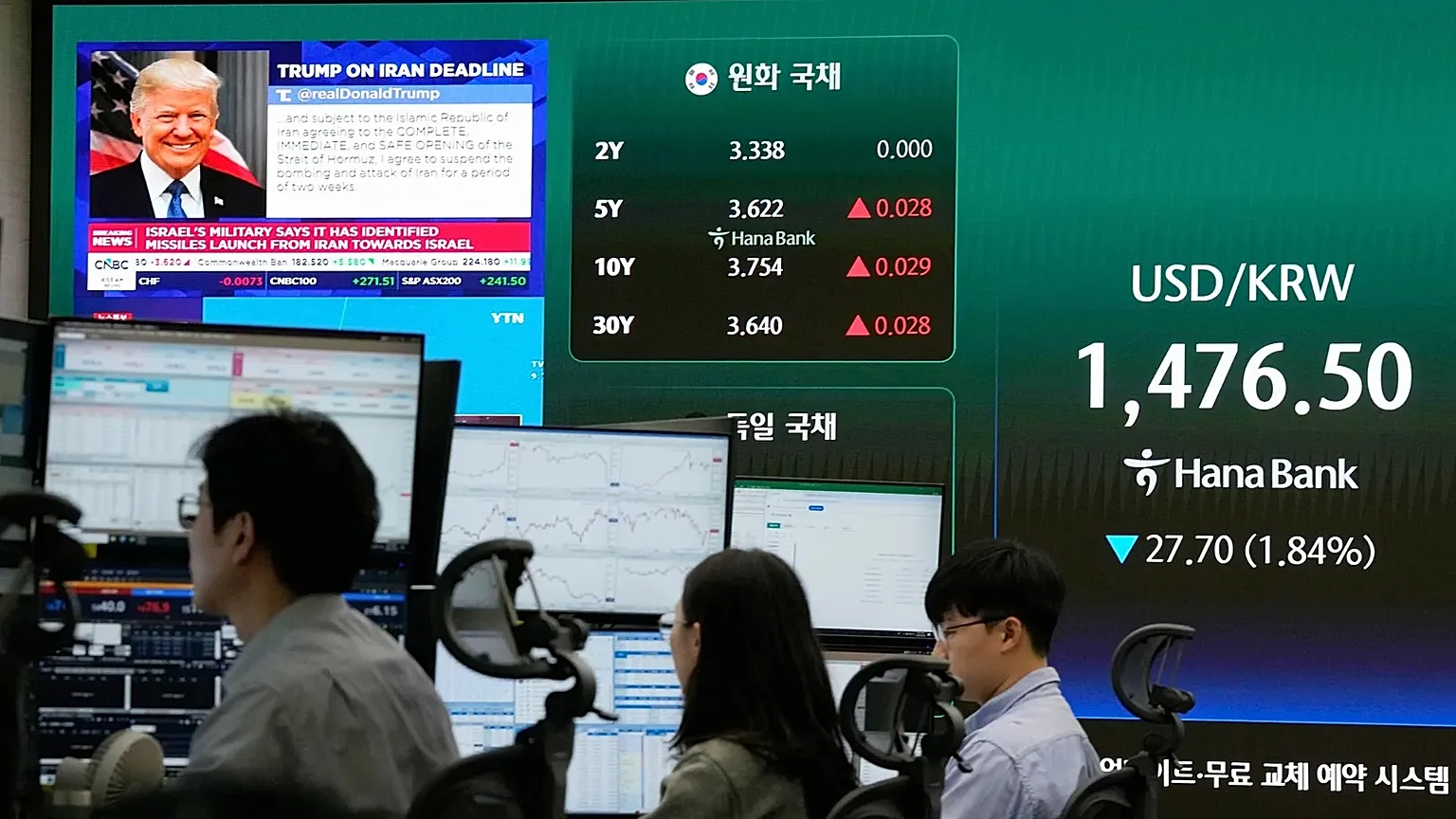

A wave of relief swept across global financial markets on Wednesday, following the announcement of a two-week ceasefire between the United States and Iran. The truce has raised hopes for improved stability in a region critical to global energy supplies.
At the center of attention is the expected resumption of traffic through the Strait of Hormuz, a strategic route through which roughly one-fifth of the world’s oil supply passes. As a result, oil prices fell sharply, dropping below the symbolic $100-per-barrel threshold.
Both Brent crude and West Texas Intermediate posted significant declines, reflecting easing concerns over supply disruptions. Natural gas prices also dropped markedly, with the Dutch TTF benchmark—Europe’s reference—falling steeply.
However, the situation remains fragile. Pakistan, which helped mediate the ceasefire, urged restraint after renewed regional tensions, including strikes involving Israel and Lebanon, as well as Iranian attacks targeting Gulf countries.
Equity markets reacted strongly to the news. On Wall Street, major indexes surged as investor risk appetite rebounded. European markets also closed sharply higher, with strong gains recorded in Paris, Frankfurt, Madrid, Milan, and London.
Airlines were among the biggest winners, including Delta Air Lines, American Airlines, and Air France-KLM, benefiting from improved outlooks and lower fuel costs. In contrast, major oil companies such as Chevron, ExxonMobil, and Shell declined amid falling crude prices.
Bond markets also reflected the easing tensions, with sovereign yields across Europe dropping significantly as fears of inflation and aggressive rate hikes subsided.
Meanwhile, the US dollar weakened against major currencies, including the euro and the British pound, pressured by lower energy prices and renewed investor confidence in riskier assets.
Despite the positive momentum, analysts warn that volatility could quickly return depending on developments in the Middle East, where the geopolitical situation remains uncertain.