




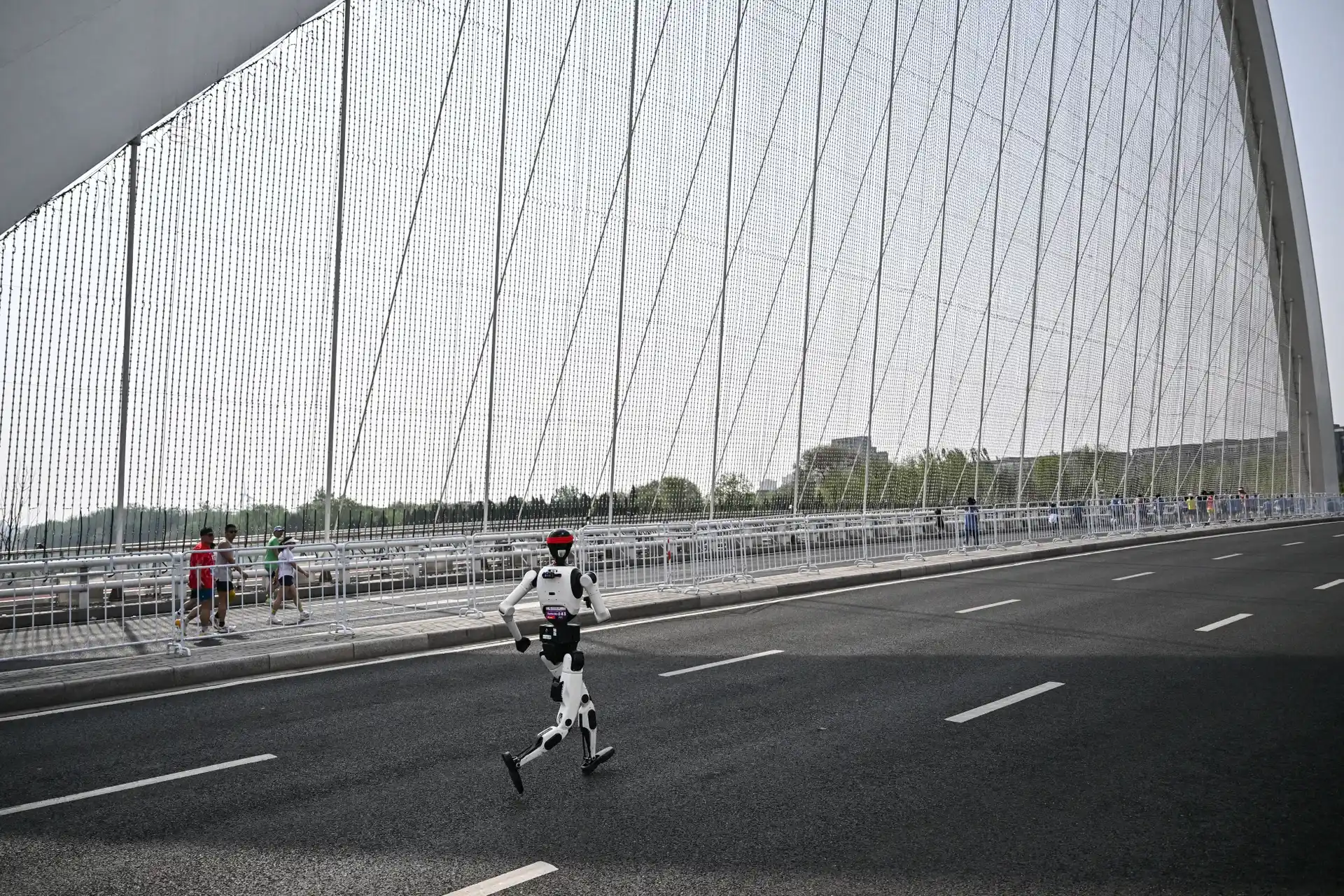
Chinese robotics is reaching a new spectacular milestone: some humanoid robots are now capable of running faster than humans. This development is turning sports competitions into true technological demonstrations.
In Beijing, during recent events such as robot half-marathons, bipedal machines were tested on 21-kilometer courses. Some not only completed the race but also competed with top human athletes, showcasing major advances in balance, coordination, and embedded artificial intelligence.
Chinese engineers are using these competitions to test the limits of their creations in real-world conditions: uneven terrain, sharp turns, endurance management, and automatic fall recovery. Despite still frequent technical incidents, these robots are showing rapid progress, evolving from fragile machines into systems capable of maintaining sustained speeds over long distances.
These performances are part of a broader strategy by China, which has become a major global player in robotics. The country is investing heavily in humanoid robots designed for both industrial and service applications, with increasingly autonomous and versatile machines.
While humans still outperform robots in overall endurance and adaptability, the line between human and robotic performance is becoming increasingly blurred. Some recent robots have even managed to break human half-marathon records, marking an unprecedented technological turning point.