
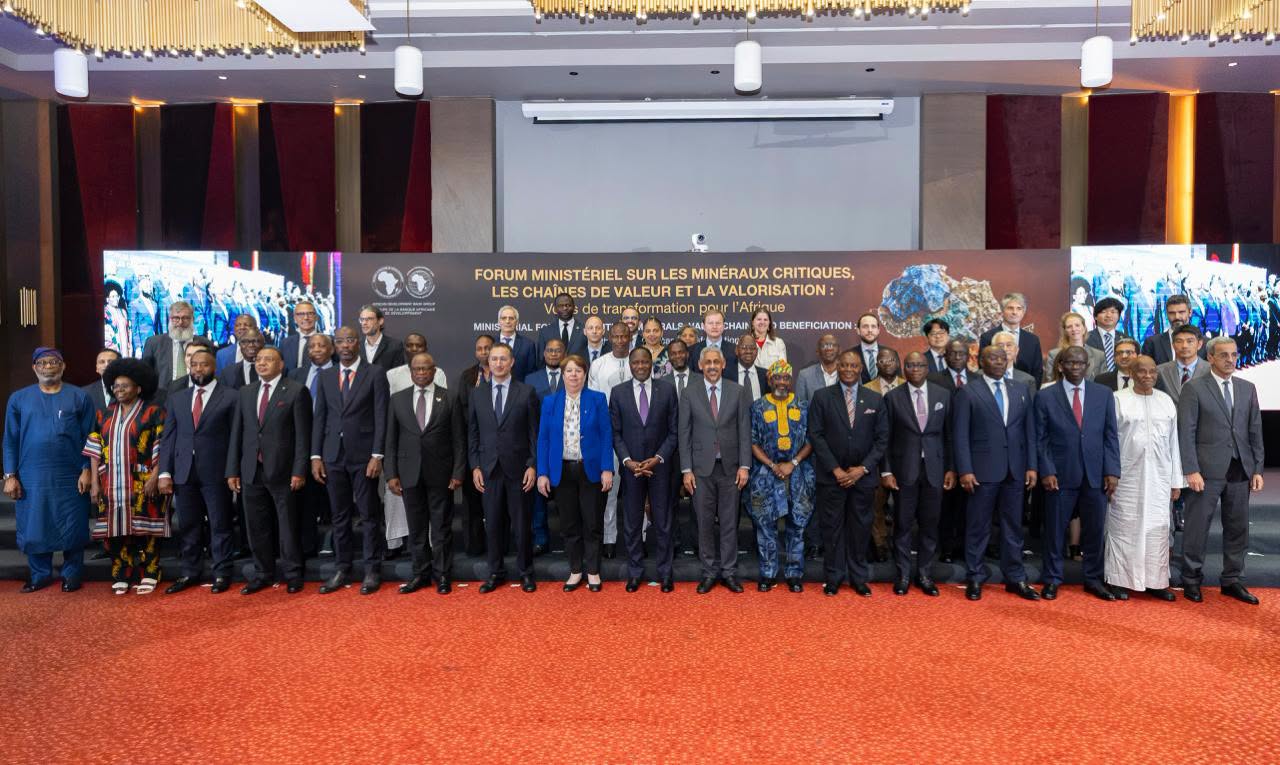
The reforms undertaken by Morocco to modernize and strengthen the governance of its mining sector were highlighted during the Ministerial Forum on Critical Minerals, Value Chains and Valorization: Pathways for Africa’s Transformation, held in Abidjan at the initiative of the African Development Bank (AfDB) and the African Union Commission (AUC).
Speaking during this high-level ministerial conference, Morocco’s Ambassador to Côte d’Ivoire, Othman El Ferdaous, underlined that the Kingdom, under the enlightened leadership of His Majesty King Mohammed VI, has embarked on a profound transformation of its mining sector to make it a key driver of industrial sovereignty, economic competitiveness and sustainable development.
He noted that Morocco benefits from major assets, including diversified geological potential, a long-standing mining tradition, a stable institutional environment, adequate infrastructure and a strategic geographical position connecting Europe, Africa and the Atlantic region.
Mr. El Ferdaous highlighted two major reforms currently being pursued by Morocco. The first concerns the evolution of the legislative and regulatory framework through the revision of Law No. 33-13 on mining, with the aim of adapting mining governance to new challenges related to strategic and critical minerals, encouraging investment and promoting local value creation.
The second reform focuses on strengthening national geological knowledge through intensified mapping, exploration and the enhancement of geoscientific data, enabling better identification and valorization of Morocco’s mineral potential.
The Moroccan diplomat also highlighted the progressive digitalization of the mining cadastre, which aims to ensure greater transparency, legal certainty and efficiency in the management of mining titles. He stressed that Morocco is working to fully integrate Environmental, Social and Governance (ESG) principles across the mining value chain, in line with international best practices.
Beyond these national reforms, Mr. El Ferdaous emphasized Morocco’s commitment to enhanced international cooperation, particularly within Africa, recalling the Kingdom’s dedication to South-South cooperation.
In this regard, he reaffirmed Morocco’s readiness to share its expertise with African countries in areas including mining governance, geology, training, digitalization, research, industrial transformation and mineral resource valorization.
He further stressed that critical minerals represent a major opportunity for the African continent and should become a driver of prosperity, regional integration and sustainable industrialization.
“To achieve this objective, we must strengthen cooperation, pool expertise, develop trust-based partnerships and build more resilient, competitive and inclusive African value chains,” he said.
The Abidjan forum brought together African ministers responsible for mining, energy, industry, green economy and natural resources, alongside representatives of regional development banks, the African Union Commission, the African Continental Free Trade Area (AfCFTA) Secretariat, United Nations institutions, financial organizations, strategic partners and institutional investors.
According to the African Development Bank, Africa holds around 30% of global reserves of key critical minerals, including cobalt, lithium, graphite, rare earth elements, platinum group metals, copper, manganese and nickel. These resources represent a major opportunity for the continent to accelerate economic transformation and industrial development.
The meeting provided an opportunity for participants to define strategic orientations for local value creation and identify pathways to make critical minerals a key driver of Africa’s structural transformation and development priorities.