




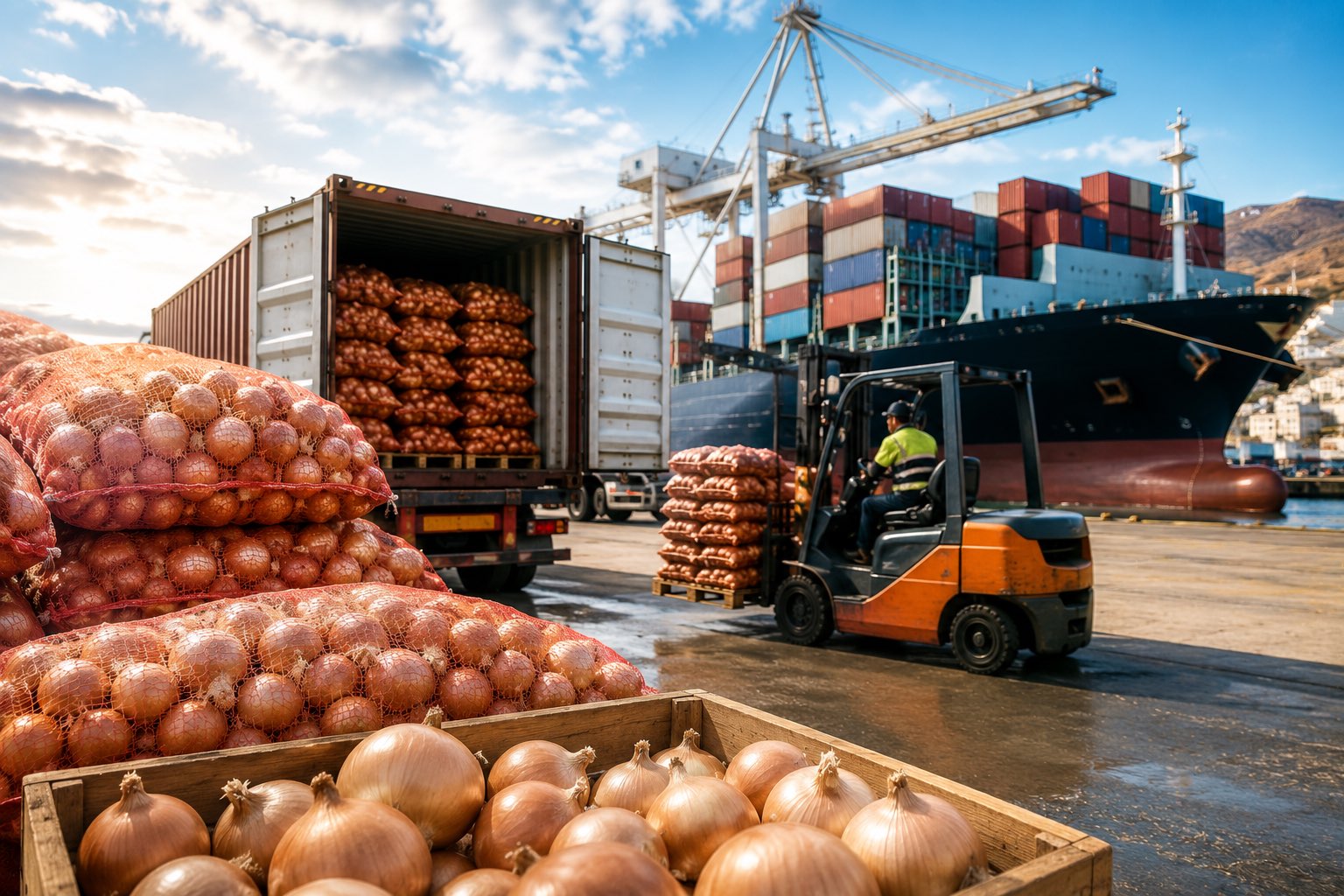
Morocco has experienced an unprecedented shift in its onion market, marking a historic turning point for one of the country’s most important vegetable supply chains. Traditionally recognized as a major onion exporter serving domestic markets and several West African countries, the Kingdom became a net importer during the 2025-2026 agricultural season.
According to the latest data released by agricultural market intelligence platform EastFruit, Morocco imported 21,600 tonnes of fresh onions between July 2025 and April 2026, representing a remarkable 700% increase compared with the previous season. In practical terms, imports expanded eightfold within a single year, reaching the highest level ever recorded and exceeding the previous historical peak registered during the 2015-2016 campaign by 2.5 times. The total value of these imports is estimated at US$9.4 million, highlighting the magnitude of the supply shock that affected the domestic market.
This dramatic increase reflects a profound transformation in Morocco’s agricultural balance. For decades, the country maintained a surplus in onion production, supplying both the domestic market and export destinations across Africa. However, a combination of adverse climatic conditions, declining agricultural yields and shrinking water resources forced the Kingdom to rely heavily on international markets to ensure adequate domestic supply. The unprecedented rise in imports illustrates the growing vulnerability of agricultural production to climate change and increasing pressure on Morocco’s food security.
Several structural and cyclical factors explain this exceptional development. Successive years of drought, persistent water shortages, reduced irrigation availability and lower productivity in key producing regions significantly curtailed domestic output. At the same time, insufficient storage and preservation infrastructure limited the ability to maintain strategic stocks throughout the year, increasing market volatility whenever production declined. These combined challenges resulted in tighter domestic supplies and rising retail prices, prompting both public authorities and private importers to secure additional volumes from overseas markets.
European suppliers played a decisive role in stabilizing Morocco’s onion market. The Netherlands accounted for more than 60% of total imports, benefiting from its large-scale production, advanced storage capacity and highly competitive export logistics. Spain supplied approximately 33% of imported volumes, while France contributed around 5%. Smaller quantities were sourced from Belgium and Egypt, allowing Moroccan importers to diversify procurement channels and minimize supply risks during the period of heightened demand.
Import activity intensified considerably during the spring of 2026. April alone accounted for more than 14,500 tonnes, representing nearly two-thirds of the total volume imported during the first ten months of the marketing season. This sharp acceleration underscores the urgency with which traders sought to replenish domestic inventories and prevent severe shortages in local markets. Maintaining adequate supplies became a priority as consumer demand remained resilient despite escalating prices.
At the same time, Morocco’s onion exports declined sharply. Between January and April 2026, exports totaled only about 2,700 tonnes, far below import volumes recorded during the same period. As a result, Morocco officially became a net importer of onions, an unprecedented situation for a country that has historically maintained a trade surplus in this commodity. This reversal illustrates the increasing impact of climate-related risks on agricultural production and highlights the strategic importance of strengthening the resilience of Morocco’s agri-food sector.
Beyond the onion market itself, this development raises broader questions regarding Morocco’s long-term food security strategy. Agricultural experts emphasize the need to accelerate investments in modern irrigation systems, climate-resilient crop varieties, expanded cold-storage infrastructure and improved post-harvest management. Strengthening strategic reserves and modernizing agricultural logistics are also viewed as essential measures to reduce market volatility and protect consumers against future supply disruptions.
Although imports are expected to ease with the arrival of new domestic harvests during the second half of 2026, the current agricultural season will remain a landmark in Morocco’s agricultural history. A 700% increase in onion imports, equivalent to an eightfold expansion in volumes, represents one of the most significant import surges ever recorded for a staple food product in the Kingdom. More importantly, it underscores the urgent need to adapt agricultural production systems to the realities of climate change while reinforcing national food security through greater resilience, improved infrastructure and more efficient supply chain management.