


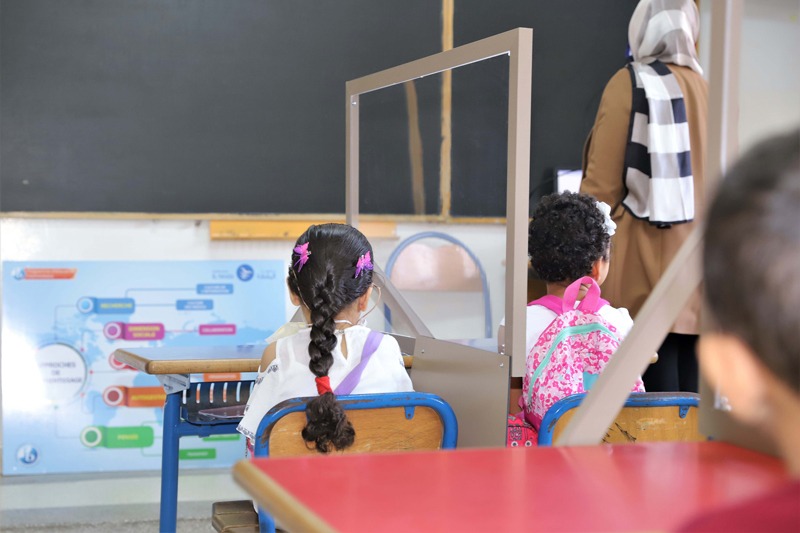
The Ministry of National Education, Preschool and Sports has unveiled the official calendar of school holidays and public holidays for the 2026-2027 academic year in Morocco.
The calendar sets out the various school break periods for students in primary, lower secondary and upper secondary education, in addition to mid-year holidays and national and religious holidays.
The first mid-term break is scheduled from October 18 to 25, 2026, providing students with their first break of the academic year.
The calendar also includes several national holidays, notably Unity Day on October 31, Green March Day on November 6, and Independence Day on November 18.
The second mid-term break will take place from December 6 to 13, 2026. It will be followed by several public holidays, including New Year’s Day on January 1, 2027, Independence Manifesto Day on January 11, and Amazigh New Year on January 14.
Students will then benefit from the mid-year holiday from January 24 to 31, 2027.
The spring period will include the holiday marking Eid Al-Fitr, scheduled from 29 Ramadan to 2 Shawwal 1448, as well as the third mid-term break, planned from March 21 to 28, 2027.
The fourth mid-term break is scheduled from May 9 to 16, 2027.
The calendar also includes Labour Day on May 1, as well as the Eid Al-Adha holiday, scheduled from 9 to 11 Dhu Al-Hijjah 1448. The Islamic New Year, corresponding to 1 Muharram 1449, is also included among the religious holidays.
As religious holidays are based on the Islamic lunar calendar, their Gregorian dates may be subject to confirmation or adjustment depending on the official observation of the new moon.
The school calendar provides families and students with an overview of the main breaks and holidays throughout the 2026-2027 academic year, allowing them to plan ahead for periods of rest and travel.
The ministry’s official calendar applies to students in the relevant public education cycles, while individual private schools may have additional arrangements depending on their educational systems.