



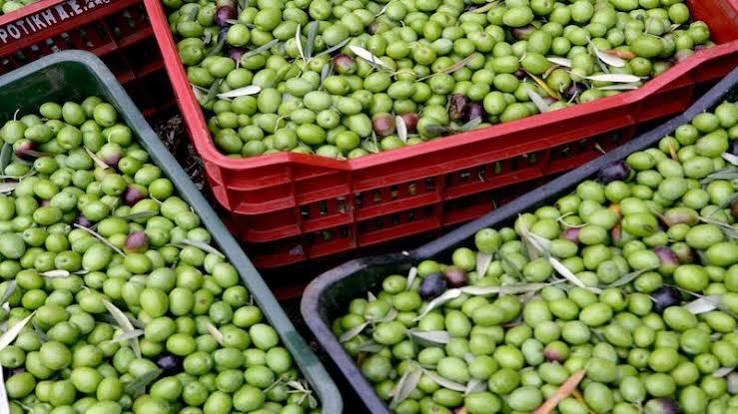

Morocco’s olive value chain is experiencing a strong recovery during the 2025-2026 agricultural season, with olive production estimated at around 2 million tonnes, up 111% compared with the previous season. This recovery comes after two seasons severely affected by drought and once again confirms the strategic importance of olives within Morocco’s agricultural and agri-food sectors.
Morocco’s olive-growing area exceeds 1.1 million hectares, of which more than 900,000 hectares are productive. Data from the professional federation indicate around 1.2 million hectares planted, with approximately 37.5% benefiting from irrigation. The value chain includes around 480,000 producers, while olive cultivation accounts for more than 65% of the area devoted to tree crops. Production has fluctuated sharply in recent years, reaching 1.968 million tonnes in 2021-2022, before falling to 1.086 million tonnes in 2022-2023 and around 1.072 million tonnes in 2023-2024.
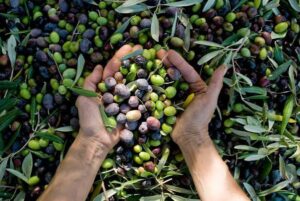 Returning to the 2-million-ton level in 2025-2026 represents an important turning point for the sector. The Moroccan Picholine remains the dominant variety, accounting for more than 90% of planted areas, alongside varieties such as Haouzia, Menara, Dahbia, Mesllala, Arbequina, Arbosana, Picual and Frantoio. The Fez-Meknes region is the country’s leading olive-growing basin, followed by Marrakech-Safi, Tangier-Tetouan-Al Hoceima, Oriental and Beni Mellal-Khenifra. Together, these five regions accounted for around 89% of production in the 2022-2023 season. Around 67% of the olive harvest is allocated to crushing, compared with 23% for processing and canning, while losses and self-consumption account for approximately 10%.
Significant industrial capacity requiring greater value creation
Morocco has around 948 modern and semi-modern olive-crushing units, with total capacity approaching 1.8 million tonnes of olives per year, in addition to approximately 11,000 traditional oil mills. The Fez-Meknes region accounts for around 62% of crushing capacity, compared with approximately 16% for Marrakech-Safi. Olive oil production reached 200,000 tonnes in the 2021-2022 season, before declining to 107,000 tonnes in 2022-2023 and around 106,000 tonnes in 2023-2024. For the 2025-2026 season, the Ministry of Agriculture expects production to reach nearly 200,000 tonnes, representing an increase of around 105%.
Quality nevertheless remains a decisive factor. According to professional federation data, extra virgin olive oil normally accounts for between 10% and 15% of production, virgin olive oil between 25% and 35%, ordinary olive oil between 20% and 25%, while lampante oil represents between 25% and 40%.
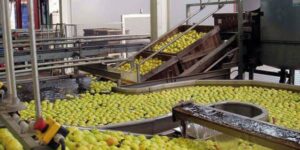
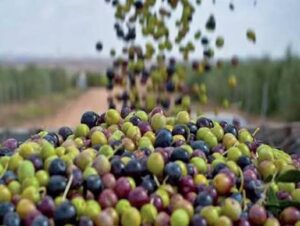 The table-olive industry represents the second major pillar of the value chain. Modern processing units have production capacity of around 203,000 tonnes per year, while industrial production generally ranges between 130,000 and 150,000 tonnes, supplemented by between 150,000 and 200,000 tonnes from the traditional sector, depending on the season. Between 70% and 75% of industrially produced table olives are exported.
Olive oil, by contrast, remains primarily directed toward the domestic market, which absorbs around 84%-85% of production. Between 2018 and 2022, average exports of olive products reached approximately 117,200 tonnes, of which 87.3% consisted of table olives and 12.6% of olive oil, with a total value of around MAD 1.92 billion. In 2024, Morocco exported approximately 8,593 tonnes of virgin olive oil, worth nearly $79.7 million.
The 2021-2030 contract-program aims to increase olive-growing areas to 1.4 million hectares, raise olive production to 3.5 million tonnes, increase industrial table-olive production to 270,000 tonnes and bring exports of olive oil and olive-pomace oil to 100,000 tonnes. The programme provides for around MAD 16.9 billion in investment, including MAD 8.3 billion in public funding.
 The future of the value chain will nevertheless depend on its ability to improve yields, rationalize water consumption, modernize farms, enhance oil quality, develop packaging and strengthen marketing under Moroccan brands. The valorization of olive by-products, particularly pomace, pits, organic residues and biomass, also opens new opportunities in energy, fertilizers, cosmetics and other higher-value products.
Against the backdrop of climate change, the challenge is no longer simply to produce more olives, but to produce better, with lower water consumption and higher added value. Morocco already has the raw material, processing infrastructure and a promising international market. The next challenge is to transform this olive-growing strength into an integrated, high-value-added agri-food industry with greater export capacity.