



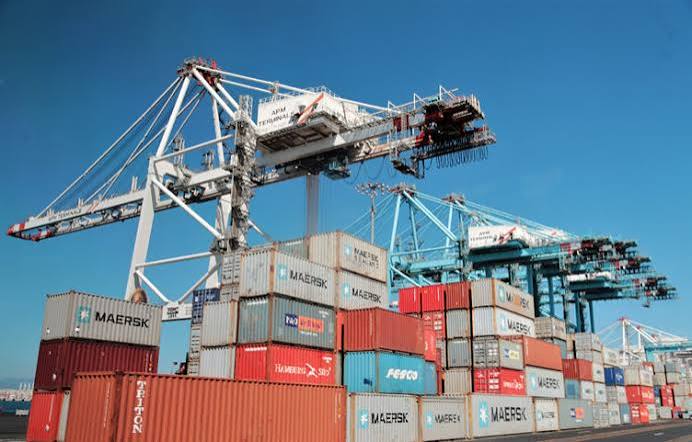

Morocco’s imports reached MAD 544.045 billion at the end of July 2026, marking a 15.9% increase, while exports totalled MAD 299.349 billion, up 8.4%. Published by the Foreign Exchange Office on 15 October, these figures highlight a 26.5% widening of the trade deficit and underscore the challenge of strengthening the competitiveness of Morocco’s export offering.
Morocco’s foreign trade continues to expand, but its two main components are growing at significantly different rates. During the first seven months of 2026, the value of imports increased at a pace almost twice that of exports. This divergence directly affects the trade balance and raises questions about the economy’s ability to translate investment and industrial production growth into higher export revenues.
According to indicators published by the Foreign Exchange Office, Morocco’s imports of goods totalled MAD 544.045 billion between January and July. Exports to international markets, meanwhile, reached MAD 299.349 billion. The resulting gap between the two flows stood at MAD 244.696 billion.
This figure represents the trade deficit calculated from the published data. Its 26.5% increase compared with the same period in 2025 reflects a deterioration in the merchandise trade balance, despite the growth in exports.
Imports Outpace Export Growth
The 15.9% increase in imports is the main arithmetic driver behind the widening trade deficit. This development may reflect several economic dynamics, including higher demand for capital goods, industrial supplies, energy products and intermediate goods, as well as stronger domestic demand. However, the precise contribution of each category must be established using the Foreign Exchange Office’s detailed breakdown.
Not every increase in imports necessarily signals economic weakness. Purchases of machinery, industrial equipment and technology can accompany the expansion of production capacity, business modernisation and new investment projects. Such imports can strengthen future competitiveness, provided they effectively support domestic production and generate greater exportable value added over the medium term.
The interpretation differs when import growth primarily concerns consumer goods, inputs that are difficult to replace with domestic production, or products whose costs are particularly sensitive to international price fluctuations. In these circumstances, external dependence can increase pressure on trade balances.
A detailed assessment must therefore distinguish between the nature of imports and their economic purpose. Aggregate figures alone are insufficient to determine whether rising imports reflect productive momentum or growing external vulnerability.
On the export side, the 8.4% increase confirms continued growth in Moroccan sales to international markets. However, this performance remains insufficient to offset the acceleration in imports. The challenge is not only to increase export volumes but also to raise domestic value added, strengthen local content and improve the ability of Moroccan companies to gain access to new markets.
Industry at the Heart of the Trade Balance Equation
A sustainable reduction in the trade deficit will depend, to a considerable extent, on the ability of Morocco’s industrial sectors to expand their export-oriented production. Automotive manufacturing, aerospace, phosphates and derivatives, textiles, agro-industry and electrical equipment are particularly relevant to this discussion. Their respective contributions to the July 2026 results, however, must be assessed using detailed sectoral data.
The objective goes beyond increasing gross exports. An industrial sector may record substantial international sales while continuing to import a significant share of its components, raw materials and equipment. Improving the external balance therefore also requires developing domestic supplier networks, strengthening industrial skills, encouraging innovation and expanding local production of components and intermediate inputs.
This strategy calls for coordination between industrial policy, training, business financing and investment attraction. Developing integrated value chains can help retain a larger share of wealth within the national economy, reduce certain external dependencies and improve exporters’ resilience to international disruptions.
Market diversification represents another important lever. Greater access to markets in Africa, Europe, the Middle East and other regions with strong potential could create new opportunities for Moroccan producers. Such expansion must be accompanied by effective market intelligence, a thorough understanding of market-access requirements and targeted support for small and medium-sized enterprises seeking to develop their international presence.
A Key Indicator That Requires a Broader Perspective
The merchandise trade deficit does not, on its own, reflect the full scope of Morocco’s economic relations with the rest of the world. Tourism receipts, remittances from Moroccans living abroad, service exports and other current-account flows also contribute to the country’s external balance. Foreign direct investment and international financing affect other components of the balance of payments.
A comprehensive assessment of Morocco’s external position must therefore consider merchandise trade alongside service revenues, transfers and financing flows. It must also distinguish between changes in value and changes in volume, since international prices and exchange-rate fluctuations can alter the import bill without corresponding changes in the quantities traded.
Nevertheless, the figures recorded through the end of July provide an important signal for businesses and economic policymakers. They highlight the need to monitor the composition of imports, the performance of major export industries and developments in international markets over the coming months.
The priority is not to reduce imports indiscriminately, as many imported goods are essential to investment and production. Rather, Morocco needs to strengthen domestic productive capacity, competitively replace selected imports wherever economically viable, and accelerate the technological upgrading and value-added content of its exports.
By the end of July 2026, Morocco’s trade flows were expanding, but the growth remained unbalanced. With imports reaching MAD 544.045 billion against exports of MAD 299.349 billion, the country faces the challenge of translating more of its industrial potential into foreign-exchange earnings. The evolution of the trade deficit in the coming months will depend both on the cost of international purchases and on Moroccan companies’ ability to produce, innovate and sell more effectively in global markets.