




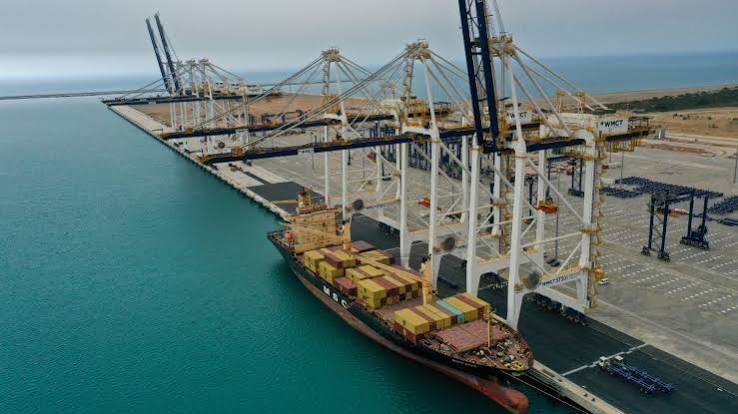
Nador West Med has taken a further step in its financial development with the securing of a €196.7 million long-term loan. Granted by a consortium of three Moroccan banking groups to West Med Container Terminal, the financing will cover part of the investment required for the first phase of the East Terminal, which is scheduled to enter service in the fourth quarter of 2026.
Morocco’s port infrastructure development continues to attract banking support for projects considered strategic to foreign trade and industrial logistics. In Nador, the West Med project illustrates this momentum through a new financing operation designed to strengthen the Kingdom’s port capacity along its Mediterranean coastline.
West Med Container Terminal has signed a €196.7 million long-term credit agreement with a consortium comprising three Moroccan banking groups. The financing will contribute to the investment required for the first phase of the East Terminal at Nador West Med, an infrastructure project expected to expand Morocco’s logistics capabilities.
Mobilising long-term bank financing is an important instrument for infrastructure development, as such projects require substantial capital commitments and financial planning aligned with construction schedules and operational lifecycles.
Financing to strengthen port infrastructure.
A banking consortium enables several financial institutions to participate in a single project while sharing the financing commitment. In the port sector, this type of arrangement helps cover investment requirements related to facilities, equipment and operational capacity.
In the case of Nador West Med, the announced loan will finance part of the East Terminal’s investment needs. Although the €196.7 million commitment highlights the scale of the resources required to develop the facilities, it does not represent the total cost of the project.
The first phase is scheduled to enter service in the fourth quarter of 2026. Meeting this deadline and progressively bringing the facilities into operation will be important milestones in assessing the economic impact of the investment.
A strategic asset for industrial logistics.
Beyond its role as a port infrastructure project, Nador West Med forms part of a broader strategy to strengthen transport networks and support the development of economic activities.
Adequate port capacity can facilitate raw material imports, industrial product exports and the organisation of supply chains. For businesses, logistics efficiency directly affects operating costs, delivery times and competitiveness in international markets.
A port’s performance depends on several factors, including the smooth flow of operations, service quality, cargo handling times and connections to land-based transport networks.
The development of the complex could also encourage complementary activities in transport, warehousing, cargo handling and business services. The scale of these economic benefits will depend on the pace of operational development and the port’s integration into the surrounding economic environment.
Banks as partners in strategic investment.
The financing agreement highlights the role of Moroccan banks in supporting long-term infrastructure projects. Their participation helps mobilise resources for investments whose financial requirements often exceed the lending capacity of a single institution.
Nador West Med’s economic performance will depend on several factors: completion of the facilities, effective commissioning of the equipment, the attraction of port operators and growth in cargo volumes.
Over the medium and long term, the complex’s ability to generate regular commercial flows and integrate into industrial logistics networks will be a key indicator of its performance.
With this €196.7 million loan, West Med Container Terminal is strengthening the financing structure supporting the development of the East Terminal. The objective extends beyond building infrastructure: it is to convert investment into operational logistics capacity that supports foreign trade and enhances Morocco’s industrial competitiveness.