




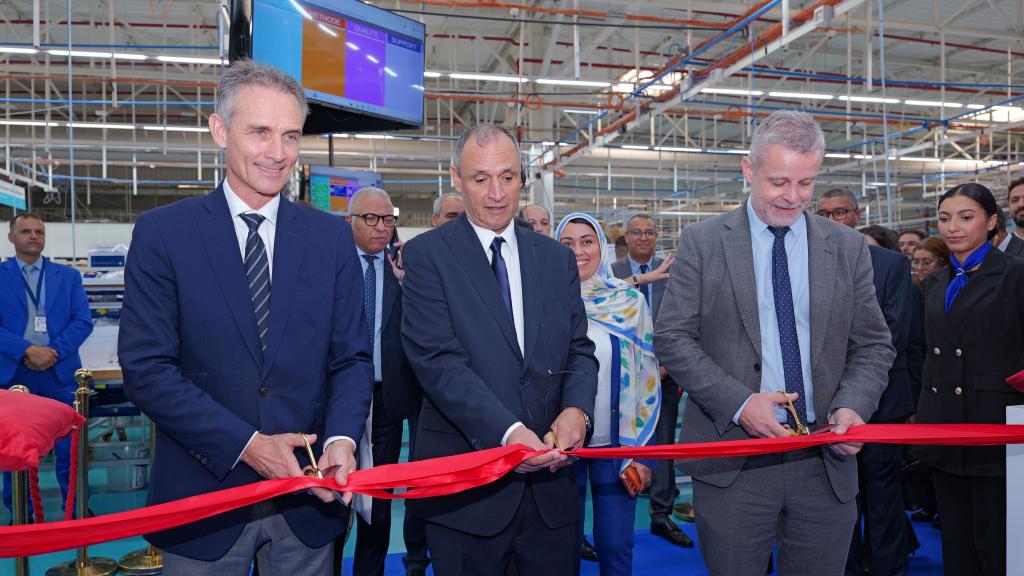

To mark the 20th anniversary of its industrial site in Temara, Safran Electrical & Power inaugurated a new extension to its facilities in the presence of several officials, including Ryad Mezzour, Morocco’s Minister of Industry and Trade, and Philippe Lalliot, France’s Ambassador to Morocco. The expansion supports the continued growth of the site’s activities and strengthens Safran’s industrial capabilities to meet the requirements of major global aerospace programmes.
Safran is further strengthening its industrial presence in Morocco through the expansion of Safran Electrical & Power’s facilities in Aïn Atiq, near Temara, with an additional 5,700 square metres of industrial space. The project reflects the continued development of the group’s activities in the Kingdom and highlights the growing role of Morocco’s aerospace ecosystem in international value chains.
Safran Electrical & Power, a subsidiary of the French Safran Group specialising in electrical systems for aircraft, is entering a new phase in the development of its Aïn Atiq site, located in the Rabat-Salé-Kénitra region. The expansion comes as Morocco continues to strengthen its position as an industrial platform for international aerospace manufacturers and suppliers.
The additional 5,700 square metres are intended to support the site’s development in an industrial environment benefiting from the growing momentum of aerospace activities in Morocco. This investment reflects the importance of strengthening local industrial capabilities in a sector where quality, reliability and operational performance are critical requirements.
Electrical systems play an increasingly important role in modern aircraft, as technological advances and evolving operational requirements drive demand for increasingly sophisticated equipment and solutions. Expanding industrial facilities therefore represents an important step in supporting the needs of major aircraft manufacturers and international aerospace programmes.
For Morocco, the development of such facilities goes beyond an increase in industrial floor space. It contributes to consolidating a specialised manufacturing base connected to international original equipment manufacturers and suppliers, while creating opportunities to deepen the integration of local companies into global aerospace value chains.
A Stronger Industrial Ecosystem for Morocco’s Aerospace Sector
The expansion of the Aïn Atiq site comes amid Morocco’s efforts to strengthen its integration into global aerospace value chains. The presence of international groups helps develop technical skills, structure local subcontracting networks and raise industrial standards across the supply chain.
Commenting on the milestone, Serge Pons, Managing Director of Interconnection Systems Eurasia, stated: “This anniversary and this new extension demonstrate Safran’s confidence in Morocco and its talent over the past twenty years. Thanks to the commitment of our teams, the Temara site has become an essential link in our industrial footprint. This new phase will enable us to support the growth of our activities and prepare for the challenges of tomorrow’s aerospace industry.”
 The expansion of production capabilities can also help improve operational organisation and accommodate future market requirements. The precise impact, however, will depend on the activities deployed in the extended facilities, the associated investment and the group’s evolving industrial needs.
Safran is an established player in Morocco’s aerospace industry, where its various entities contribute to the development of specialised industrial activities. Its presence reflects an industrial strategy built around market proximity, the availability of skilled workers and the competitiveness of manufacturing sites.
For Morocco’s industrial ecosystem, the challenge is to translate these investments into sustainable economic benefits, including skilled employment, technology and know-how transfer, the development of local suppliers and the upgrading of domestic manufacturers.
Aerospace is one of the sectors capable of diversifying Morocco’s industrial exports and strengthening the Kingdom’s visibility among major international manufacturers. The expansion of Safran’s Aïn Atiq facilities illustrates this trend, although further details on additional jobs, the total investment amount and the commissioning schedule have yet to be specified.
In the longer term, the competitiveness of Morocco’s aerospace industry will also depend on continued investment in technical training, innovation, infrastructure and industrial integration. These factors will be essential to enabling Moroccan companies to capture a greater share of the value generated by the global aerospace industry.