Tourism continues to strengthen its position as one of the strategic drivers of Morocco’s economy. According to the latest figures from the High Commission for Planning (HCP), released on Tuesday, October 20, 2026, tourism’s gross domestic product (GDP) reached MAD 129.7 billion in 2025, compared with MAD 116.2 billion in 2024, representing an increase of 11.7%.
This performance raises the sector’s contribution to national GDP to 7.5%, highlighting the growing importance of an industry that plays a central role in economic growth, investment, employment, and the Kingdom’s external financial balances.
Morocco’s tourism industry has reached a new milestone in its contribution to national wealth creation. The results of the 2025 Tourism Satellite Account reveal a consolidation of tourism activity, driven by stronger international demand, improvements in accommodation capacity, and the expansion of related services. With tourism GDP reaching MAD 129.7 billion, the sector generated an additional MAD 13.5 billion in economic value within a single year, reaffirming its role in diversifying the national economy.
This momentum is also reflected in tourism’s growing share of national GDP, which increased from 7.2% in 2024 to 7.5% in 2025. Total tourism output reached MAD 199.4 billion, compared with MAD 181.9 billion a year earlier, representing growth of 9.6%. Meanwhile, the value added generated by tourism-related activities stood at MAD 106.8 billion, an increase of 10.8%. These indicators demonstrate simultaneous growth in economic activity and the wealth generated by the sector.
Tourism Consumption Exceeds MAD 222 Billion.
One of the most significant findings in the latest statistics concerns domestic tourism consumption, which reached MAD 222.4 billion in 2025, compared with MAD 201.7 billion in 2024, representing an increase of 10.3%. This expansion was primarily driven by inbound tourism, whose consumption rose from MAD 136.9 billion to MAD 154 billion, an increase of 12.5%.
Inbound tourism now accounts for 69.2% of total domestic tourism consumption, compared with 67.9% the previous year. This development confirms the importance of non-resident visitors, particularly international tourists and Moroccans living abroad, in supporting the country’s tourism economy. At the same time, consumption associated with domestic and outbound tourism increased by 5.5% to MAD 68.4 billion, illustrating the continued contribution of national demand.
A Strategic Sector for Investment and Employment.
These economic results follow a record-breaking year for Morocco’s tourism industry. In 2025, the country welcomed 19.8 million international tourists, an increase of 14% compared with 2024. Tourism receipts also reached MAD 138.1 billion over the year, strengthening the sector’s contribution to foreign currency earnings and the Kingdom’s external financial stability.
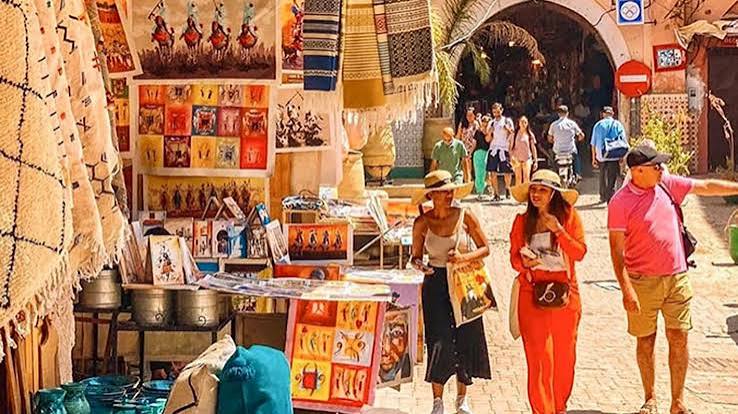
Beyond these figures, tourism represents a major driver of investment in hospitality, infrastructure, transportation, restaurants, handicrafts, and services. Its expansion also encourages the emergence of new economic activities across Morocco’s regions. According to figures presented by the Organisation for Economic Co-operation and Development (OECD), the sector accounted for approximately 894,000 direct jobs in 2025, confirming its importance to the national labour market.
Morocco’s 2023–2026 Tourism Roadmap, focused on strengthening air connectivity, diversifying tourism products, and improving service quality, remains one of the main frameworks guiding this transformation. Nevertheless, the sector’s expansion also presents significant challenges related to vocational training, business competitiveness, environmental sustainability, and the geographical distribution of investment.
Turning Tourism Growth into Sustainable Economic Value.
For Morocco, the challenge now extends beyond simply increasing visitor numbers. The priority is to raise tourism spending per stay, develop local value chains, and strengthen the economic benefits generated across the country’s regions. Integrating small and medium-sized enterprises, handicraft producers, local agriculture, and digital services into the tourism ecosystem will be essential to maximising the sector’s multiplier effects throughout the national economy.
Preparations for major international events, particularly the 2030 FIFA World Cup, offer an additional opportunity to accelerate infrastructure modernisation and strengthen Morocco’s international positioning as a leading tourism destination. However, this prospect requires an investment strategy capable of ensuring that new facilities and infrastructure remain economically viable long after the events have concluded.
With tourism GDP approaching MAD 130 billion and accounting for 7.5% of national economic output, Morocco’s tourism industry is reaffirming its position as one of the structural pillars of the Kingdom’s economy. The central challenge for the coming years will be to transform this quantitative expansion into sustainable economic development, capable of creating skilled employment, increasing domestic value added, and promoting more balanced regional prosperity.