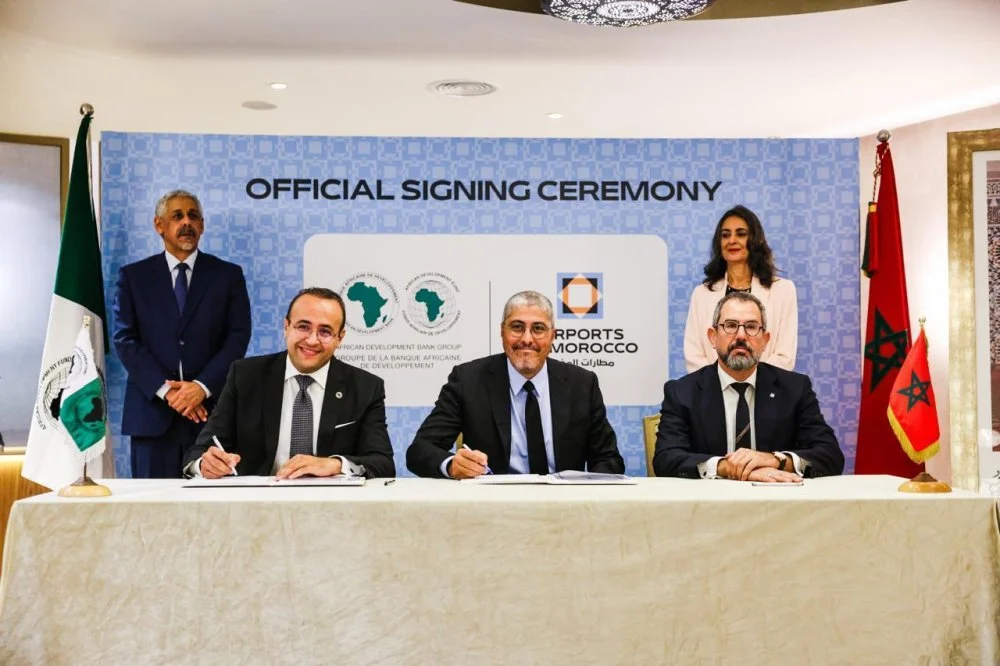
The financial partnership between Morocco and the African Development Bank (AfDB) is entering a new phase. According to information published on October 22, 2026, the pan-African financial institution is providing $487 million in support of the Kingdom’s economic and climate resilience. This financial package comes at a time when Morocco must reconcile accelerating investment, industrial transformation, climate adaptation and the preservation of macroeconomic stability.
Development financing remains one of the central challenges facing Morocco’s economic transformation, particularly as demand grows for infrastructure, industrial equipment, water security and climate adaptation projects.
Against this backdrop, the Kingdom continues to diversify its partnerships with international financial institutions to mobilize additional resources for its development and investment programmes.
The African Development Bank’s announced $487 million support package forms part of this strategy, reflecting the institution’s commitment to strengthening Morocco’s economic and climate resilience.
The Kingdom faces several structural challenges requiring sustained investment. Water scarcity, recurring droughts, rising energy demand and persistent territorial disparities are placing increasing pressure on public finances and development capacity.
These constraints coincide with the implementation of major investment programmes designed to enhance national competitiveness. Transport and logistics infrastructure, hydraulic facilities, energy installations and industrial zones are among the sectors requiring substantial long-term financing.
In this environment, support from multilateral financial institutions can help advance economic reforms, strengthen institutional capabilities and improve the country’s ability to adapt to climate-related risks.
The African Development Bank has maintained a close partnership with Morocco for several decades, supporting strategic sectors including energy, water, transport, agriculture and social development. Its interventions have played an important role in financing public policies and mobilizing resources for major development programmes.
The significance of this partnership extends beyond financial contributions to include technical expertise, governance improvements and stronger project preparation and evaluation mechanisms.
Reconciling Economic Competitiveness with Climate Adaptation
The economic importance of the new financial package must be assessed in light of the structural transformations confronting Morocco. Climate change has become a direct determinant of economic competitiveness. Its consequences are no longer confined to agriculture but increasingly affect water-intensive industries, electricity generation, infrastructure and corporate operating costs.
Securing reliable water supplies is becoming an essential condition for attracting new industrial investment. International companies increasingly incorporate climate risks, resource availability and long-term environmental sustainability into their investment and location decisions.
Developing climate-resilient infrastructure can also help reduce economic losses caused by extreme weather events and improve the continuity of productive activities. At the same time, the energy transition is creating new industrial opportunities. Investment in renewable energy, energy efficiency and decarbonization technologies could encourage the emergence of new industrial value chains while supporting employment and technological development.
These transformations are particularly important for Morocco as it seeks to strengthen its position within international manufacturing and supply networks. Environmental standards and the carbon footprint of industrial products are becoming increasingly important factors in accessing foreign markets, particularly in Europe.
For Morocco, the strategic challenge is to integrate these transformations into a territorial development policy capable of distributing economic opportunities more evenly across regions. Multilateral financing can act as a catalyst for this process, but its effectiveness depends on project quality, transparent governance, sound financial management and institutional implementation capacity.
The precise terms of the $487 million package, including its allocation across programmes, financing instruments and repayment conditions, still require examination of the African Development Bank’s official documentation. Ultimately, this partnership reflects a fundamental shift in development financing strategies.
Climate resilience is no longer merely an environmental objective; it is becoming a central component of economic competitiveness, industrial attractiveness and investment security.The key challenge for Morocco will be to transform these financial resources into productive and sustainable projects capable of strengthening economic, energy and water security while supporting a more resilient development model.