



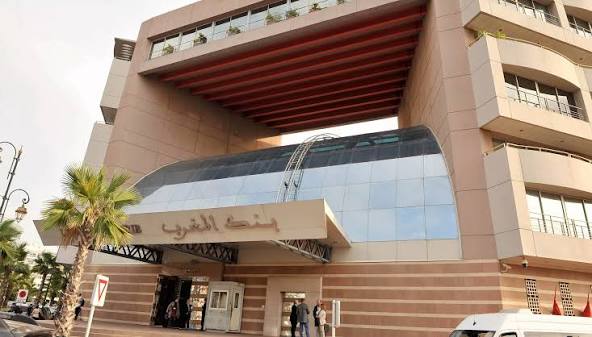
On Friday, July 24, Bank Al-Maghrib (BAM) released a new reference exchange rate showing a depreciation of the Moroccan dirham against the U.S. dollar, as the greenback continued to strengthen on international financial markets. The move comes amid persistent geopolitical tensions and rising oil prices, two key factors that have reinforced global demand for the U.S. currency as a safe-haven asset.
The dirham’s decline primarily reflects developments in global foreign exchange markets. The U.S. dollar has maintained its upward momentum, supported by heightened geopolitical uncertainty, investors’ risk aversion, and expectations that U.S. monetary policy will remain relatively restrictive. At the same time, higher crude oil prices have fueled demand for dollars, the dominant currency used in international energy transactions, putting additional pressure on the currencies of emerging economies, including the Moroccan dirham.
This development should not, however, be interpreted as a sign of weakness in Morocco’s economic fundamentals. The dirham operates under a managed flexible exchange rate regime supervised by Bank Al-Maghrib and is pegged to a currency basket composed of 60% euro and 40% U.S. dollar. Since the launch of the exchange rate reform in 2018, Morocco’s central bank has gradually increased the flexibility of the national currency while preserving monetary and financial stability.
The latest reference exchange rate is being issued against a backdrop of heightened global uncertainty, characterized by geopolitical conflicts, disruptions in global supply chains, volatile energy markets, and shifting international capital flows. These factors continue to support the strength of the U.S. dollar against many world currencies.
For Morocco, a stronger dollar may translate into higher import costs for energy products, industrial equipment, and raw materials priced in U.S. currency, increasing production costs for several sectors of the economy. Conversely, exporters generating revenues in dollars could benefit from more favorable exchange rate effects when converting their earnings into Moroccan dirhams.
In this environment, Bank Al-Maghrib continues to play a central role in safeguarding the stability of the foreign exchange market by publishing daily reference exchange rates, closely monitoring market developments, and maintaining comfortable levels of official foreign exchange reserves. These measures enable the central bank to absorb external shocks and preserve confidence in Morocco’s monetary and financial system.
The publication of this new exchange rate underscores the close integration of the Moroccan economy with global financial markets. More than a routine adjustment, it reflects the ongoing adaptation of the dirham to an increasingly volatile international environment, where geopolitical developments, energy prices, and monetary policy remain the main drivers of currency movements worldwide.