




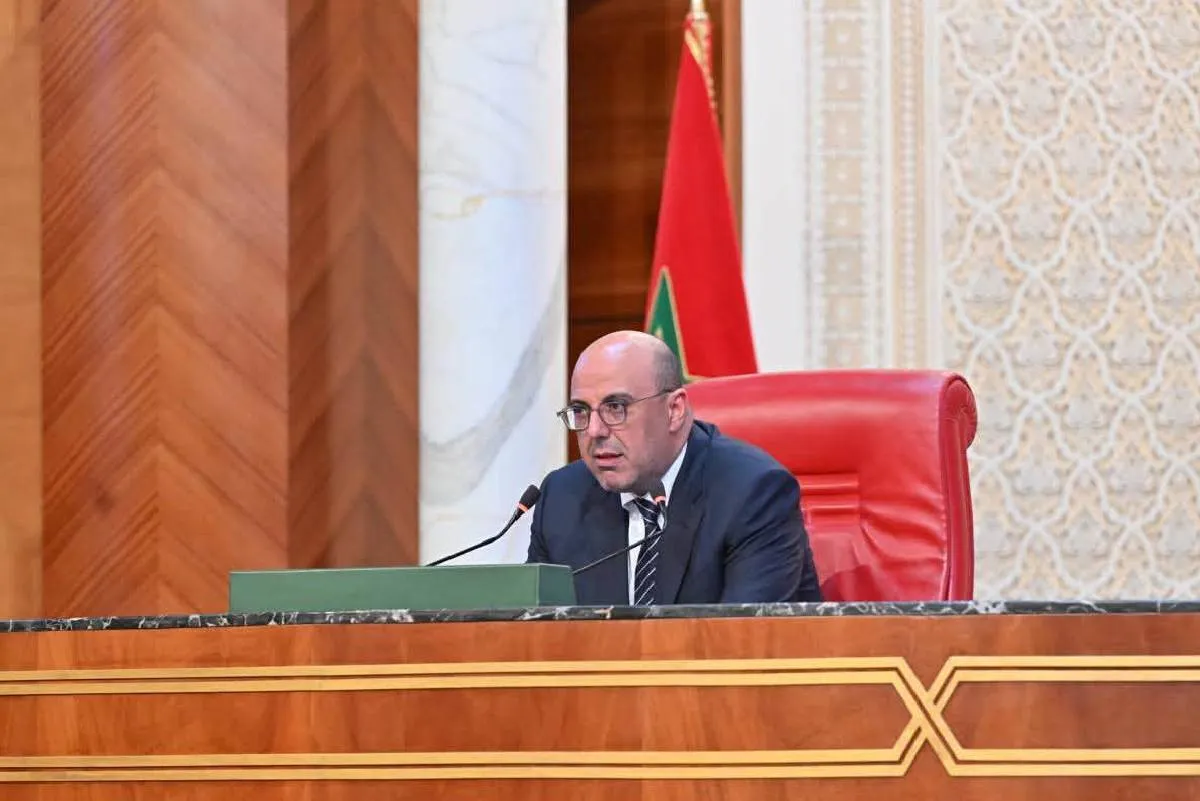
Morocco’s House of Councillors reached a historic milestone during the second session of the 2025-2026 legislative year, as private members’ bills outnumbered government bills adopted in plenary for the first time since the institution was established.
Speaking at the closing session on Monday, President of the House of Councillors Mohamed Ould Errachid said the achievement reflects the collective commitment of the chamber’s members to strengthen parliamentary legislative initiatives and encourage greater participation in the lawmaking process.
During the session, the House held ten legislative plenary sittings, examining and approving 108 legal texts, including 55 private members’ bills and 53 government bills, among them three organic laws. Ould Errachid described the figure as an unprecedented record for a single legislative session since the creation of the House.
The adopted legislation included major reforms across several strategic sectors. These covered the restructuring of public institutions and the transformation of entities such as the National Ports Agency (ANP) and the National Office of Hydrocarbons and Mines (ONHYM) into joint-stock companies, in addition to reforms involving Regional Development Agencies and the creation of Regional Urban Planning and Housing Agencies (ARUH).
The session also approved legislation aimed at modernizing the national statistical system by transforming the High Commission for Planning (HCP) into an independent governance institution. Other adopted texts focused on strengthening the banking sector’s financial risk prevention framework and improving the governance of higher education institutions.
In the social sector, lawmakers approved amendments related to the governance of the healthcare system, medical regulatory bodies, the Pharmaceutical Code, the direct social assistance program, labor regulations for private security personnel, and measures encouraging companies to invest in vocational training and workforce integration.
The House also adopted legislation concerning the organization of judicial experts, Adouls (notaries under Islamic law), lawyers, the restructuring of the National Press Council (CNP), amendments to the status of professional journalists, several international agreements, and the organic law governing the constitutional challenge of legislation.
Ould Errachid praised members for their active contribution to improving the legislative texts submitted to the chamber, noting that 1,077 amendments were proposed, 115 of which were adopted.
Regarding parliamentary oversight, he said social, territorial, and economic issues dominated debates during the session. A total of 458 oral questions were submitted, with the government responding to 264 of them during twelve plenary sessions involving 24 government departments.
The government also answered 174 out of 401 written questions submitted during the session, including responses to questions carried over from previous sessions.
As part of its evaluation of public policies, the House reviewed the government’s performance and discussed the annual report presented by the First President of the Court of Auditors on the activities of Morocco’s financial courts for the 2024-2025 period. Debates also focused on food security and public policies addressing climate change and the country’s preparedness to face its impacts.
Ould Errachid further highlighted the work of the House’s standing committees, which held 61 meetings totaling nearly 110 hours. He also noted that the chamber received several opinions from the Economic, Social and Environmental Council (ESEC), the National Human Rights Council (CNDH), and the Competition Council on draft legislation under review.