

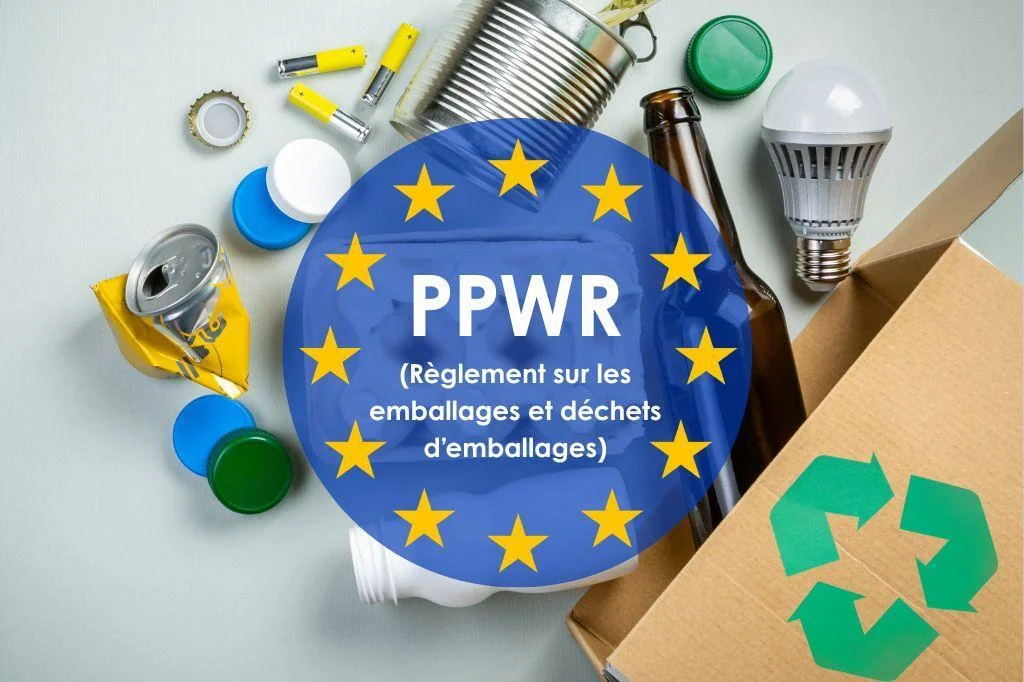
August 12, 2026, will mark a major turning point in trade relations between Morocco and the European Union. On that date, the Packaging and Packaging Waste Regulation (PPWR – Regulation (EU) 2025/40) will become fully applicable, introducing new requirements for all companies manufacturing, importing, or exporting packaged products to the European market. For Morocco, whose exports to the European Union account for nearly 60% of its total exports, this reform represents far more than a regulatory update—it is a true competitiveness test for the country’s entire industrial sector.
The PPWR introduces a new generation of environmental regulations based on the principles of the circular economy. Packaging will now have to be designed to be recyclable, incorporate recycled materials, minimize the use of hazardous substances, reduce unnecessary packaging volume, and promote reuse wherever possible. Unlike previous EU directives, the PPWR is a regulation that applies directly across all European Union Member States without requiring national transposition. As a result, it becomes legally binding for every supplier serving the European market, including Moroccan companies.
For Moroccan industry, the stakes are significant. The Kingdom is home to more than 13,000 industrial companies, several thousand of which export directly or indirectly to Europe. Industries such as plastics manufacturing, agribusiness, fruit and vegetable exports, fisheries, automotive, textiles, electrical components, cosmetics, and pharmaceuticals rely extensively on packaging that must now comply with the new European standards.
The impact will be particularly significant for Morocco’s plastics industry, which includes several hundred companies, employs tens of thousands of workers, and supplies packaging solutions to virtually every major industrial sector in the country. Manufacturers will need to invest in recycled resins, develop eco-designed packaging solutions, improve product recyclability, and progressively incorporate recycled raw materials into their production processes. Companies that anticipate this transformation will strengthen their competitiveness, while those that delay adaptation risk losing strategic export markets.
The agri-food industry will also be directly affected. As Morocco’s leading exporter of agricultural and food products to the European Union, the sector will have to redesign its packaging to comply with the new environmental requirements. Exporters of berries, citrus fruits, tomatoes, olive oil, canned fish, and processed food products will be required to demonstrate packaging compliance in order to maintain access to European markets.
Morocco’s automotive industry, now the country’s largest export sector with annual exports exceeding MAD 160 billion, will also face significant changes. Industrial packaging used for spare parts, electronic components, electrical equipment, and batteries will gradually have to meet the PPWR requirements. International manufacturers operating in Morocco, many of which are already implementing decarbonization strategies, are expected to accelerate this transition.
However, the PPWR is not merely a regulatory constraint. It also represents a tremendous industrial opportunity. European demand for sustainable, recyclable packaging incorporating recycled materials is expected to grow rapidly over the coming years. Moroccan companies capable of developing innovative packaging solutions will be well positioned to strengthen partnerships with European buyers and access new high-value markets.
Morocco possesses numerous competitive advantages to successfully manage this transformation. The Kingdom benefits from an ambitious industrial strategy, world-class logistics infrastructure, a network of modern industrial zones, and exceptional geographic proximity to Europe. Investments in plastic recycling, the circular economy, renewable energy, and industrial decarbonization continue to expand, creating favorable conditions for the emergence of a new generation of sustainable packaging solutions.
Nevertheless, adapting to the PPWR will require a collective effort. Industrial companies will need to invest in research and development, modernize production equipment, strengthen quality control systems, and obtain the certifications required by the European market. Public authorities, professional associations, technical centers, standardization bodies, and financial institutions will also play a decisive role in supporting this transition.
Key priorities include developing a genuine national plastic recycling industry, increasing the production of food-grade recycled plastics, strengthening testing laboratories, supporting SMEs in achieving regulatory compliance, and training new specialists in eco-design and packaging life-cycle assessment.
The Made in Morocco label, officially launched in 2025, could also become a strategic asset. By combining industrial quality, environmental compliance, and innovation, the label would provide Moroccan companies with an additional competitive advantage in European markets, where environmental performance is becoming an increasingly important purchasing criterion.
Looking ahead to 2030, the PPWR has the potential to become a powerful catalyst for Morocco’s industrial modernization. Companies investing today in sustainable packaging will gain a long-term competitive advantage, strengthen their international market presence, and contribute to building a Moroccan manufacturing sector that is more innovative, more circular, and more resilient.
Ultimately, the challenge extends far beyond regulatory compliance. It is about transforming a European legal obligation into a driver of competitiveness, innovation, and value creation. For Morocco, the PPWR represents a unique opportunity to accelerate its transition toward a more sustainable industrial model, consolidate its position as a leading industrial platform at Europe’s gateway, and make the circular economy a new engine of economic growth, job creation, and international attractiveness.