
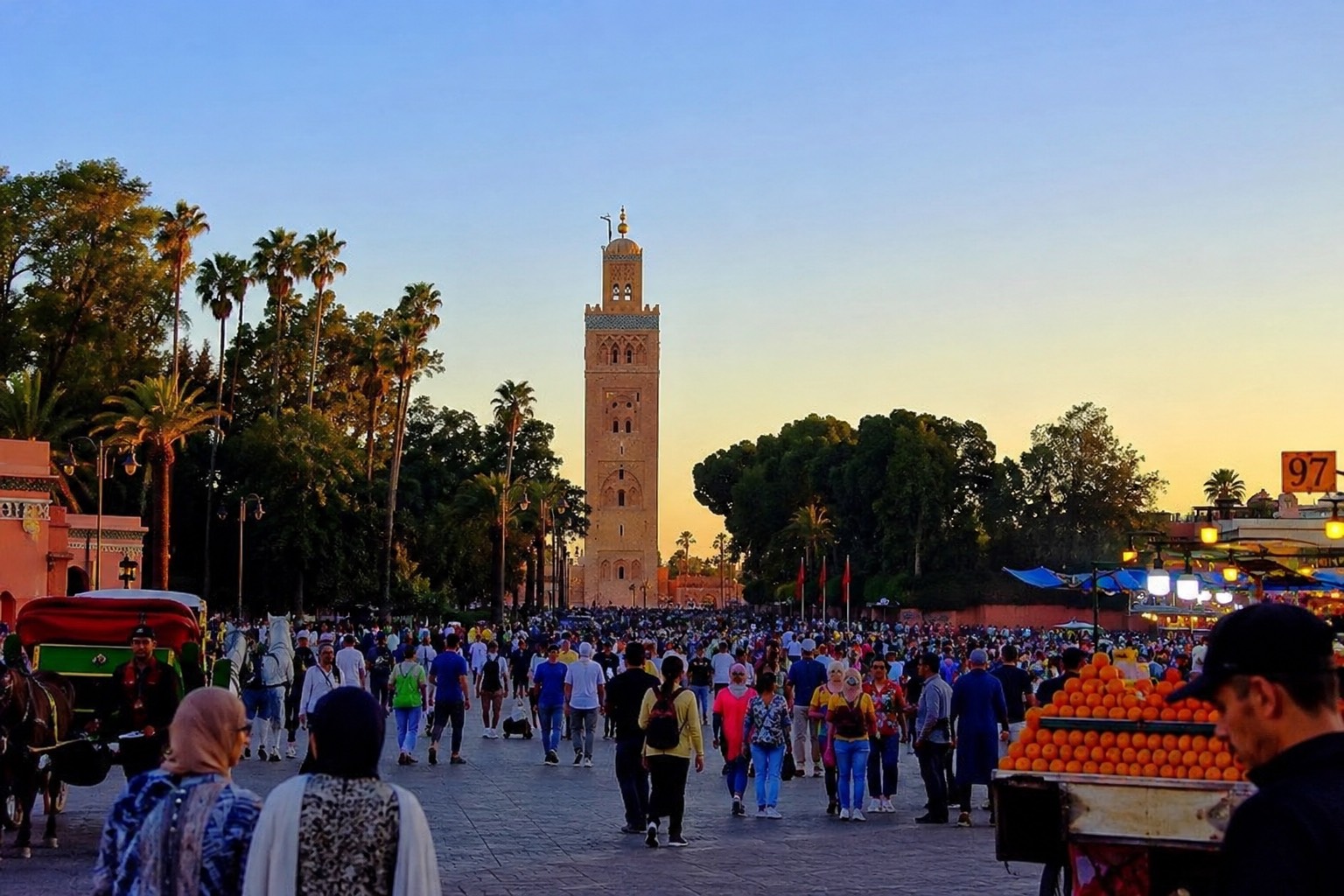
Morocco’s tourism industry continued its remarkable momentum in 2026, reaffirming its role as one of the country’s main economic growth engines. Despite an international environment marked by geopolitical tensions, slower economic growth in several key source markets, disruptions to air transport, and regional conflicts, the Kingdom continues to deliver strong performances, consolidating its position as one of Africa’s and the Mediterranean’s most attractive tourist destinations.
During the first five months of 2026, Morocco welcomed 7.7 million visitors, representing a 7% increase compared with the same period in 2025. Growth accelerated further in May, with tourist arrivals rising by 13%, highlighting the country’s increasing appeal across European, African, American and Middle Eastern markets. After reaching a historic 17.4 million tourists in 2025, Morocco has maintained its upward trajectory and is steadily moving toward the ambitious targets outlined in the national Tourism Roadmap.
This strong performance has translated directly into higher tourism revenues. At the end of May 2026, travel receipts reached MAD 53.76 billion, compared with MAD 46.91 billion a year earlier, representing a 14.6% increase and an additional MAD 6.85 billion injected into the national economy. During the first quarter alone, tourism receipts had already reached MAD 31 billion, up 24% year-on-year, reflecting not only higher visitor numbers but also increased average spending per tourist, a clear sign of Morocco’s ongoing shift toward higher-value tourism.
Tourism remains one of the pillars of Morocco’s economy. According to the latest consolidated data from the High Commission for Planning (HCP), the sector accounts for 7.3% of the country’s Gross Domestic Product (GDP). Tourism GDP is estimated at MAD 116.2 billion, underscoring the industry’s strategic contribution to national wealth creation. Beyond its direct impact, tourism generates significant spillover effects across transportation, trade, handicrafts, hospitality, cultural industries, financial services and private investment.
The sector is also one of Morocco’s largest employers. The latest official figures indicate that tourism supported 894,000 direct jobs in 2025, up from 802,000 in 2022, representing the creation of 92,000 new direct jobs in just three years—a performance that exceeded the targets established under the 2023–2026 Tourism Roadmap. This growth reflects the sector’s strong capacity to stimulate employment across hotels, restaurants, travel agencies, tourist transport, hospitality services, handicrafts, cultural activities and the social economy.
One of the most striking features of Morocco’s tourism industry is its exceptional resilience. Following the global COVID-19 pandemic, the sector not only recovered but surpassed its pre-pandemic performance. Despite higher transportation costs, geopolitical instability, inflationary pressures, disruptions in global supply chains and regional conflicts, Morocco has successfully preserved its attractiveness through a strategy based on market diversification, expanded air connectivity, continuous investment in tourism infrastructure, modernization of hospitality facilities and an ambitious international promotion strategy led by the Moroccan National Tourist Office (ONMT).
This resilience is further reinforced by the country’s increasingly diversified tourism offering. Beyond its traditional destinations such as Marrakech, Agadir, Casablanca, Fez and Tangier, Morocco is expanding high-value tourism segments including cultural tourism, beach tourism, ecotourism, mountain tourism, desert tourism, sports tourism, wellness tourism, medical tourism and business tourism. This diversification helps spread visitor flows across the country while maximizing the economic benefits for local communities and regional economies.
The outlook remains highly promising. Supported by major investments under the 2023–2026 Tourism Roadmap and preparations for the 2025 Africa Cup of Nations and the 2030 FIFA World Cup, which Morocco will co-host alongside Spain and Portugal, the Kingdom continues to modernize its tourism, hospitality, airport and transport infrastructure. The government’s objective is to welcome 22 million international visitors and generate more than MAD 150 billion in annual tourism receipts, further strengthening tourism as one of Morocco’s leading drivers of economic growth, investment and employment.
The results achieved during the first half of 2026 clearly demonstrate that Morocco’s tourism industry has entered a new phase of maturity. More competitive, more diversified and increasingly focused on high-value market segments, the sector continues to demonstrate exceptional resilience in the face of global crises while reinforcing its contribution to economic growth, employment, foreign exchange earnings and the Kingdom’s international influence. More than simply an economic activity, tourism has become a strategic pillar of Morocco’s sustainable development and long-term competitiveness.