
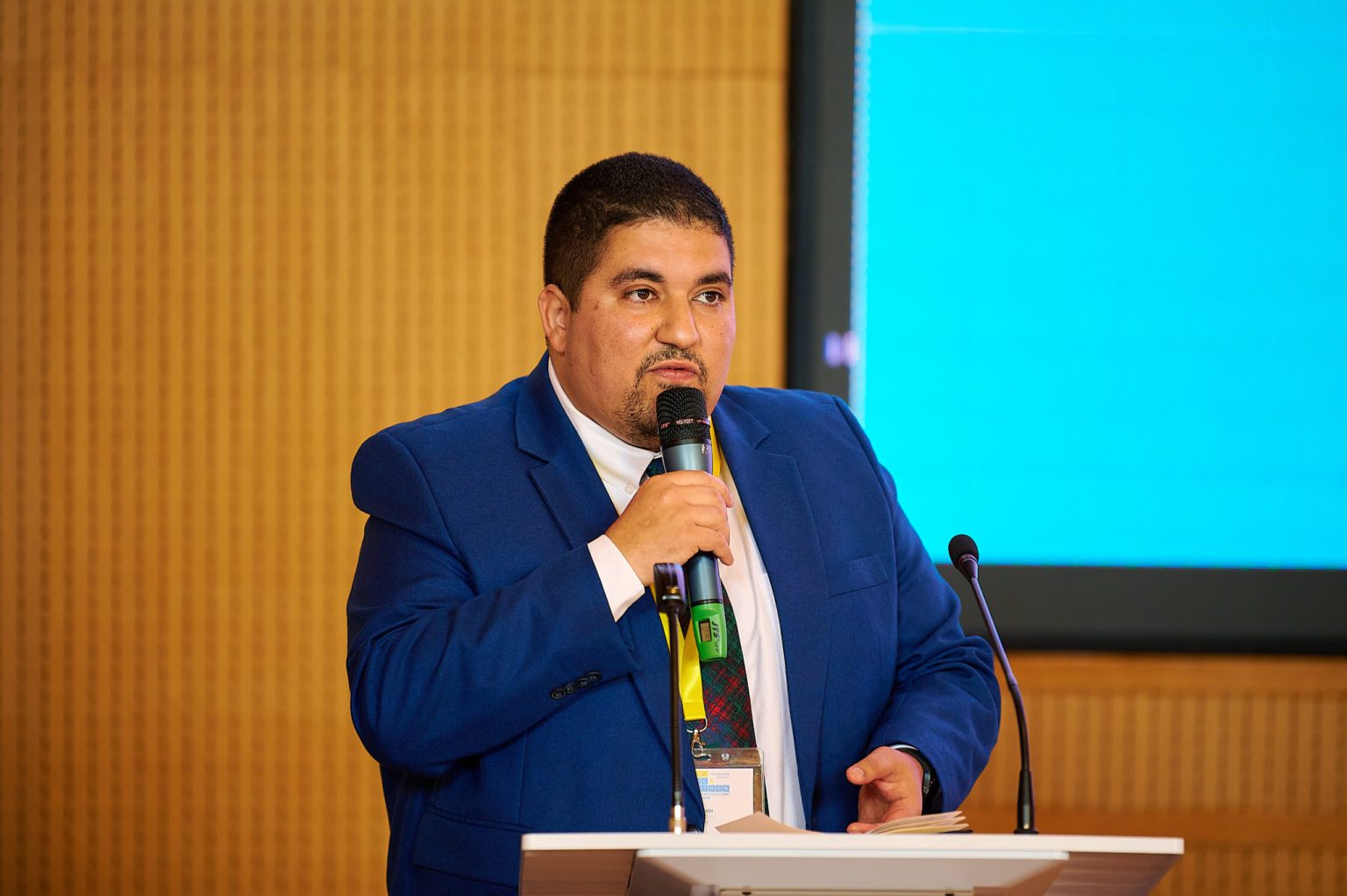
As industrial and energy sovereignty becomes a major priority for Morocco, IRESEN positions itself as a key catalyst for the country’s national transition. By leveraging cutting-edge research platforms, ambitious pilot projects, and synergies with universities and the private sector, the institute aims to elevate Morocco as an exporter of technological solutions and “Made in Morocco” expertise. In this interview, Samir Rachidi, CEO of IRESEN, outlines the concrete levers that will allow Morocco to build a more competitive, innovative, and sustainable industry.
Q: What role does IRESEN play today in strengthening Morocco’s energy and industrial sovereignty?
Since our creation in 2021, IRESEN has supported the National Energy Strategy through research and development. We act as a bridge between universities, industry, and the private sector. With strategic partners such as OCP and UM6P, we provide access to R&D platforms (Green Energy Park, Green & Smart Building Park, Green H2A) and market-oriented calls for projects, turning ideas into products and processes “Made in Morocco.” This interface strengthens sovereignty by reducing reliance on imported technologies and developing local industrial assets and national expertise.
Q: How do your research programs contribute to a competitive local industry in solar, wind, and green hydrogen?
Our programs are designed “from lab to fab”: system qualification, prototyping, real-world testing, and support for pre-industrialization. Through 18 national, bilateral, and multilateral calls for projects, we support university–industry consortia in developing advanced innovations adapted to the Moroccan and African energy context. Our research platforms also reduce costs and accelerate access to high-end equipment for Moroccan SMEs.
The result: a fast-learning domestic sector delivering competitive solutions.
Q: Green hydrogen – what are the real prospects for energy autonomy and industrial applications?
Morocco has structural advantages: competitive solar and wind resources, a strategic geographic position linking continents, and a structured “Morocco Offer” attracting private investment. Our strategy is clear: first produce green molecules (ammonia, methanol, e-fuels), then export high-value derivatives. Cost simulations show that Morocco can become one of the most competitive producers globally as CAPEX declines and factories come online.
We are structuring and deploying our R&D & Innovation Offer for Morocco’s hydrogen ecosystem—going beyond studies to platforms, pilots, demonstrators, and skills development.
One flagship initiative is Green H2A (Green Hydrogen to Applications), a collaboration between IRESEN, UM6P, and OCP with KfW support, funded with approximately €13.5 million.
The first project on Green H2A is a pre-industrial green ammonia pilot (4 tons/day) supported by a 4 MW electrolyzer (2 MW PEM + 2 MW alkaline). The platform, on a 5-hectare site at Jorf Lasfar, will feature indoor labs, research offices, and multiple outdoor demonstrators.
We are also planning a Power-to-Liquid (PtL) pilot to produce e-methanol, signaling opportunities for investors, training experts, and developing industrial skills. Green H2A will begin receiving its first pre-industrial pilots in Q1 2026, testing electrolyzers, identifying technological challenges, and tracking technology maturity.
Q: What role does technological innovation (storage, digitalization, e-mobility, materials) play in sovereignty strategy?
It is central: storage ensures system security and cost smoothing, digitalization optimizes production and maintenance, e-mobility decarbonizes demand, and materials mastery secures critical components. Our platforms and project pipeline serve as testbeds to localize value-chain segments—from battery cells and BMS to optimization software and power conversion components.
Q: How do universities and startups contribute to sustainable industrial sovereignty?
The lab–startup duo is one of the most powerful levers for accelerating innovation. Through calls for projects in partnership with universities and the private sector, we co-supervise theses targeting technology transfer. Startups such as iSmart, GEP Services, LISOL already emerge on our platforms.
We help move technologies from TRL 4-5 to TRL 7-8, transforming prototypes into market-ready solutions, creating local technological champions that meet domestic needs and expand across Africa. Success depends on a supportive ecosystem: accessible funding, adapted fiscal incentives, and alignment with real startup needs.
Q: Key achievements in technology transfer and industrial valorization?
- World-class infrastructure (GEP, GSBP, GH2A): shared access to heavy equipment for industry, startups, and collaborative projects.
- EU–Africa programs (LEAP-RE, SE): building a pipeline of fundable innovations bridging research and industrial solutions.
- Hydrogen/Power-to-X: public roadmap since 2021, dedicated research platforms, skill networks, high-impact studies, regional and international cooperation, and H₂ project calls.
Q: How can Morocco become an exporter of technologies and know-how in a competitive international context?
- Innovation financing: increase R&D & innovation investment from public and private partners to launch first factories, create startups, certify solutions, and train talent—fueling exportable products and investor confidence.
- Local R&D subcontracting: industrialize critical technological components (electrolyzers, storage packs and BMS, converters, advanced O&M).
- Multiply demonstrators: using innovative financing mechanisms (H₂, e-fuels, grid flexibility) to de-risk private investment and create exportable references.
- Strategic alliances: with academic centers and international financing agencies to upgrade technology and open markets.
- Local standards & certification: shorten time-to-market for Moroccan companies.
- Human capital: continuous training aligning industrial skills with international standards.
Our compass is impact: every dirham invested in R&D&I must create value, skills, and capabilities to boost Morocco’s industrial competitiveness. The transition is not a slogan—it is a real economy built step by step, serving energy sovereignty and exporting Moroccan know-how.