



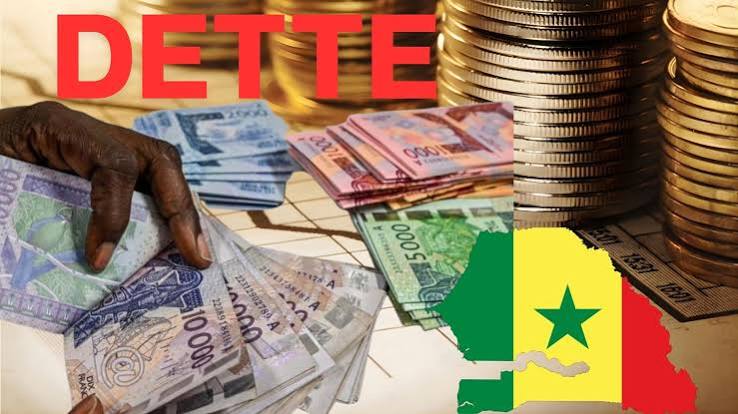

Senegal has reached a major milestone in the management of its public debt. After several months of preparation, Dakar launched formal discussions with its external creditors on October 6, 2026, under the good offices of the International Monetary Fund (IMF). The process now opens the way for structured negotiations aimed at restoring debt sustainability and rebuilding fiscal space.
The process is part of the Senegal Debt Treatment Plan (PTDS), officially launched by the government on September 1. According to data presented at this initial stage, the debt of the central government and public enterprises stood at CFAF 27.132 trillion at the end of 2025, equivalent to 105.3% of GDP. External debt amounted to CFAF 18.394 trillion, or 71.4% of GDP.
The government has decided to rely on the G20 Common Framework, with an enhanced approach designed to coordinate discussions with different creditor groups. The framework provides for greater information sharing, parallel consultations and a timetable intended to accelerate the process. CFA franc-denominated debt remains outside the announced scope of the treatment.
Negotiations now open with creditors
The first meeting on October 6 was specifically aimed at presenting creditors with Senegal’s economic and financial situation, its reform program and its debt treatment strategy. The IMF chaired the meeting at the request of the Senegalese authorities, as part of its good offices.
This step does not constitute a debt restructuring agreement, a moratorium or debt cancellation. The financial terms remain to be negotiated, including maturities, refinancing conditions, possible payment deferrals and the level of adjustment required from the different creditor categories.
According to Reuters, Dakar is now targeting an agreement in principle with official creditors and bondholders by December 2026. The authorities are also seeking a contribution from Total Return Swap (TRS) instruments, whose outstanding amount is estimated at around CFAF 1 trillion, or approximately $1.72 billion.
The IMF’s decisive role
Debt restructuring is closely linked to Senegal’s return to a financial program with the IMF. On September 1, IMF staff and the Senegalese authorities reached a staff-level agreement on a new 36-month Extended Credit Facility (ECF) arrangement worth approximately $2.2 billion. The agreement remains subject to approval by IMF management and the Executive Board, as well as the implementation of corrective measures and the securing of financing assurances.
For Dakar, therefore, the challenge goes beyond simply reducing the debt burden. The objective is to restore access to financing on more sustainable terms, reduce debt-servicing costs and free up resources for public investment.
The government reports that the budget deficit, which stood at 13.4% of GDP in 2024, was reduced to 6.4% in 2025. Fiscal consolidation is nevertheless taking place in a more difficult economic environment. After real GDP growth of 6.5% in 2024 and 6.7% in 2025, the authorities project growth of 2.7% in 2026, partly reflecting tighter fiscal conditions and external shocks.
A major issue for the private sector
The success of the process will also have direct consequences for the real economy. The government expects the gradual reduction in debt-servicing pressures to create additional fiscal space, particularly to accelerate the clearance of government arrears owed to the private sector.
This is particularly important for Senegalese businesses. Delayed government payments put pressure on corporate cash flows and investment capacity and, consequently, on employment. The PTDS is therefore also intended to inject liquidity back into the economic system and gradually restore the economy’s financing capacity.
A complex operation
The process remains highly sensitive. Senegal will have to reach a balanced distribution of the adjustment among different creditor categories while respecting the principle of comparability of treatment embedded in the G20 Common Framework.
The composition of Senegal’s debt makes the operation even more complex. In addition to official creditors and international bondholders, the country also has financial instruments introduced in recent years. Reuters reports that the international bonds concerned amount to approximately $5.2 billion, including nearly $2.2 billion held by investors participating in the initial consultation.
Senegal must also manage an immediate challenge: restoring market confidence while preventing debt treatment from placing additional pressure on investment and economic activity.
The real test starts now
The October 6 meeting therefore marks not the conclusion but the actual beginning of the negotiations. Dakar’s stated objective of reaching an agreement in principle before the end of the year now gives the talks a tight timetable.
For the Senegalese government, the objective is clear: reduce debt-servicing pressures, restore fiscal sustainability, regain gradual access to international financing and free up resources for investment and social priorities.
For creditors, the key issue will be assessing Senegal’s actual capacity to implement the announced reforms and sustainably stabilize its public finances.
Senegal’s debt restructuring has therefore entered a decisive phase. Following the disclosure of financial imbalances, the audit and preparation of the PTDS, Dakar must now convince its creditors that a new balance between fiscal discipline, economic growth and development financing is achievable.