
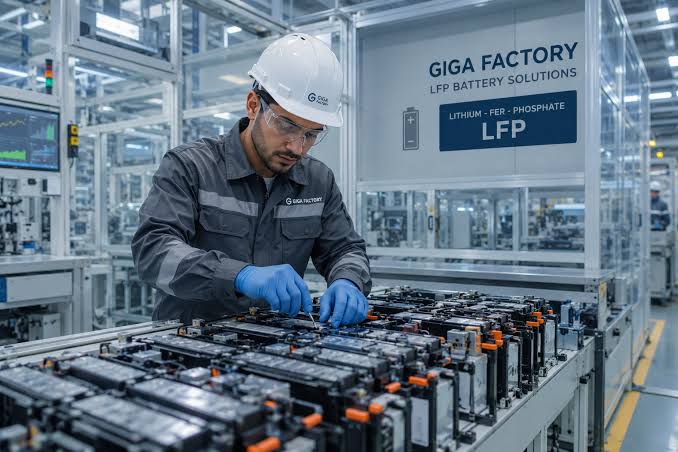
The African Development Bank (AfDB) has approved €100 million in financing to support and accelerate the development of Gotion Power Morocco, Africa’s first fully integrated lithium iron phosphate (LFP) battery gigafactory. The project represents one of the continent’s largest industrial investments in energy storage technology and electric mobility, marking a major step toward green industrialization and the development of high-value manufacturing supply chains.
The gigafactory will be located in the Rabat-Salé-Kénitra region and will cover the entire battery production value chain, from manufacturing cathode materials to producing battery cells for electric vehicles. This will make Morocco the first African country to host a fully integrated battery manufacturing facility, further strengthening its position as a regional industrial hub for next-generation technologies.
The AfDB’s financing reflects the confidence of international financial institutions in Morocco’s industrial strategy and its ambition to become a global platform for electric vehicle manufacturing and battery production. The investment is fully aligned with the Bank’s strategy of promoting sustainable industrial projects that generate skilled employment, foster innovation, and support the transition to a low-carbon economy.
Morocco enjoys a range of competitive advantages that have made it a preferred destination for major industrial investments, including macroeconomic stability, world-class logistics infrastructure, modern ports, an extensive network of free trade agreements, and a strategic geographic location connecting Africa with Europe. These strengths have enabled the Kingdom to establish itself as one of the region’s leading automotive manufacturing centers.
The new gigafactory is expected to significantly strengthen Morocco’s automotive ecosystem, which has become the country’s largest export-oriented industrial sector. As global demand for electric vehicles continues to accelerate, local battery production will enhance the competitiveness of automakers operating in Morocco while attracting new international investors to the country’s rapidly expanding clean technology sector.
The project will also facilitate technology transfer and the development of highly skilled expertise in engineering, industrial chemistry, renewable energy, and advanced manufacturing. Thousands of direct and indirect jobs are expected to be created during both the construction and operational phases, while supporting the emergence of a comprehensive industrial ecosystem encompassing chemicals, raw materials, logistics, research, and innovation.
Beyond its national impact, the project carries strategic importance for the entire African continent. It represents a historic milestone in integrating Africa into the global battery value chain at a time when worldwide demand for energy storage solutions and electric vehicles is expanding rapidly. The gigafactory also creates new opportunities to add value to Africa’s abundant mineral resources through local processing and industrial transformation rather than exporting raw materials.
This investment is fully consistent with Morocco’s long-term industrial and energy strategies, aimed at strengthening industrial sovereignty, accelerating the energy transition, and consolidating the country’s role as a manufacturing gateway linking Africa, Europe, and global markets. It also demonstrates the African Development Bank’s commitment to financing transformative projects that enhance sustainable development and improve the competitiveness of African economies.
The €100 million financing underscores that the future of African industry will be driven by innovation, clean technologies, localized value chains, and strategic investments. Through Gotion Power Morocco, Morocco and Africa are taking a decisive step toward building an advanced manufacturing industry capable of supporting the global transition to sustainable energy and electric mobility.