


Morocco’s cocoa market now represents more than $220 million in annual imports, highlighting the growing importance of the chocolate and food-processing industries, while also revealing significant potential for direct cooperation with Africa’s leading cocoa producers.
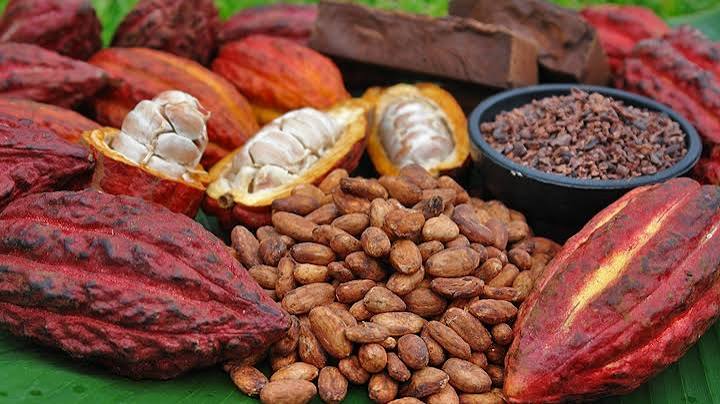
Morocco imported $220.6 million worth of cocoa and cocoa-based preparations in 2025, according to international trade data from the United Nations’ UN Comtrade database. This figure covers the entire Chapter 18 of the Harmonized System, including cocoa beans and broken beans, cocoa paste, cocoa butter and powder, as well as chocolate and other food preparations containing cocoa.
The geographical structure of these imports is particularly significant. Spain was by far Morocco’s leading supplier, with $70.3 million, followed by Italy with $19.95 million, the Netherlands with $19.32 million, Germany with $17.55 million and Belgium with $16.69 million. France accounted for $13.16 million.
However, these figures do not mean that Morocco relies primarily on Europe for raw cocoa beans. The statistics cover the entire range of cocoa products and therefore include processed products and goods re-exported from European countries. To accurately measure imports of raw material, it is necessary to isolate customs heading 1801, which covers cocoa beans and broken cocoa beans.
Africa nevertheless occupies a strategic position in Morocco’s cocoa supply chain. Côte d’Ivoire, the world’s leading cocoa producer, exported $12.82 million worth of products falling under Chapter 18 to Morocco in 2025. Ghana, meanwhile, accounted for $7.87 million.
Combined, cocoa-related products from these two West African countries exceeded $20.6 million in one year, highlighting an existing trade base that could support deeper and more direct cooperation between Morocco and West Africa.
These trade flows open new opportunities for economic relations between the Kingdom and cocoa-producing countries. Morocco has a developed food-processing industry, while Côte d’Ivoire and Ghana have significant cocoa production capacities. Greater cooperation focused on industrial processing, supply security and the creation of regional value chains could therefore become a new area of economic development.
The potential is particularly significant given the wide range of applications for cocoa within Morocco’s food industry, including chocolate, biscuits, confectionery, bakery products, beverages and prepared foods, as well as products destined for the restaurant and hospitality sectors.
For Moroccan manufacturers, the issue is therefore not limited to the volume of imports, but also concerns the amount of value added generated domestically. Increasing local processing, developing Moroccan brands and strengthening exports to African markets could gradually enable Morocco to move from an importing market towards becoming a regional hub for cocoa processing.
This outlook is part of the broader transformation of Morocco’s food-processing industry, which is seeking to strengthen competitiveness, innovation capacity and integration into international value chains.
The cocoa market is also an interesting indicator of changes in consumer demand. Demand for chocolate and cocoa-based products is influenced by demographic growth, the expansion of modern retail, changing dietary habits and household disposable income.
However, the sector remains exposed to volatility in international cocoa prices. For manufacturers, the challenge is therefore to secure supplies, diversify sourcing channels and improve productivity in order to limit the impact of raw-material costs on final consumer prices.
With $220.6 million in imports in 2025, cocoa represents far more than a simple food commodity. It has become an industrial market in its own right, positioned at the intersection of Morocco-Africa trade, food processing, local value creation and the Kingdom’s export strategy.