



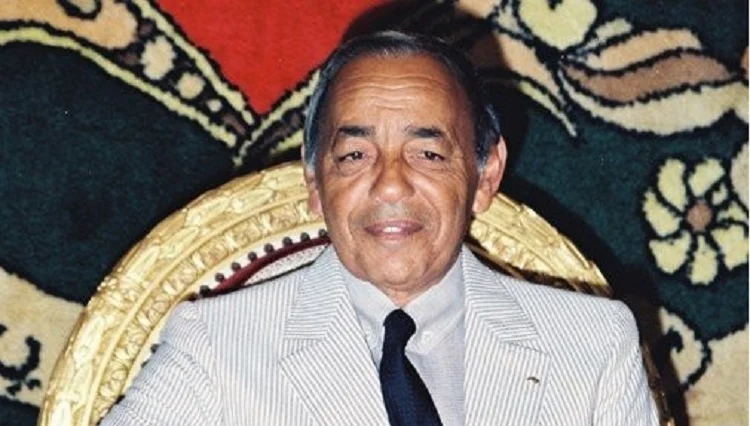

Morocco is commemorating the 28th anniversary of the passing of His Late Majesty King Hassan II, a solemn occasion recalling the legacy of the former Sovereign and his role in shaping modern Morocco.
The Moroccan people are marking the anniversary on Monday, September 21, 2026, corresponding to 9 Rabi’ II 1448 in the Islamic calendar.
The commemoration provides an opportunity to reflect on the decades of Morocco’s contemporary history associated with Hassan II’s reign, from the consolidation of national institutions and major infrastructure projects to economic development, water management, social policies and foreign affairs.
A Reign of Nation-Building and Modernization
Hassan II ascended to the Moroccan throne in 1961, succeeding his father, the late King Mohammed V. His reign focused on consolidating the institutions of the Kingdom and pursuing a number of major national development projects.
Infrastructure development, economic modernization and territorial unity were among the central issues that shaped the period.
One of the most significant events was the Green March, organized on November 6, 1975. The peaceful mobilization became a defining moment in Morocco’s contemporary history and remains closely associated with the country’s position on the issue of territorial integrity.
The Dam-Building Policy
Water infrastructure was another major focus during Hassan II’s reign.
Launched in 1966, Morocco’s dam-building policy was designed to expand irrigation capacity, support agricultural development and strengthen the management of the country’s water resources.
Over subsequent decades, the infrastructure developed under this strategy became an important component of Morocco’s efforts to manage drought and periods of water stress.
Economic and Social Development
The economic transformation of Morocco was accompanied by efforts to expand social infrastructure and improve living conditions.
Policies and development programs addressed areas including social housing, family affairs and the role of women in Moroccan society. The period also saw debates and developments surrounding human rights, political pluralism and social reforms.
Together, these initiatives contributed to the economic and social changes that marked Morocco in the decades following independence.
An Active Role on the International Stage
Hassan II’s reign was also characterized by an outward-looking foreign policy and Morocco’s engagement with regional and international affairs.
The Kingdom participated in international initiatives concerning issues including the Arab-Israeli conflict, United Nations peacekeeping and African cooperation.
Morocco was also involved in the creation of the Organization of African Unity (OAU), which later became the African Union, as well as the establishment of the Arab Maghreb Union.
A Legacy of African Engagement
Hassan II’s involvement in African affairs has continued to be highlighted in commemorations of his legacy.
On November 1, 2022, Ethiopia awarded the late Sovereign a Pan-African Prize in recognition of what it described as his contribution to Africa’s emancipation and to Pan-Africanism, particularly in connection with the creation of the OAU.
Openness and Morocco’s Plural Identity
Hassan II’s approach to foreign relations also emphasized Morocco’s links with the Western world and its engagement with modernity, while placing particular importance on the Kingdom’s plural identity.
Morocco’s identity has been articulated through its Islamic, Arab, African and Mediterranean dimensions.
As Commander of the Faithful, Hassan II also placed emphasis on the unity of the Islamic Ummah and on issues affecting Muslim countries.
A Day of Remembrance
The 28th anniversary of King Hassan II’s passing offers an occasion to revisit a significant period in Morocco’s contemporary history.
The commemoration recalls the major projects and policies associated with his reign, including territorial development, economic modernization, agriculture, water infrastructure, social development and diplomacy.
It also forms part of the broader history of Morocco’s monarchy and the transmission of the Alaouite dynasty’s historical legacy from one generation to the next.