




International oil markets have entered a new phase of volatility in mid-July 2026, driven by escalating geopolitical tensions in the Middle East. Brent crude, the global benchmark, is now trading above US$86 per barrel, while U.S. West Texas Intermediate (WTI) has moved above US$80 per barrel, posting a weekly gain of more than 10%.
The rally has been fueled by growing concerns over potential disruptions to global crude supplies, particularly around the Strait of Hormuz and the Red Sea, two strategic maritime routes for international oil shipments. Fears of supply constraints have pushed both crude oil and refined petroleum product prices higher on international markets.
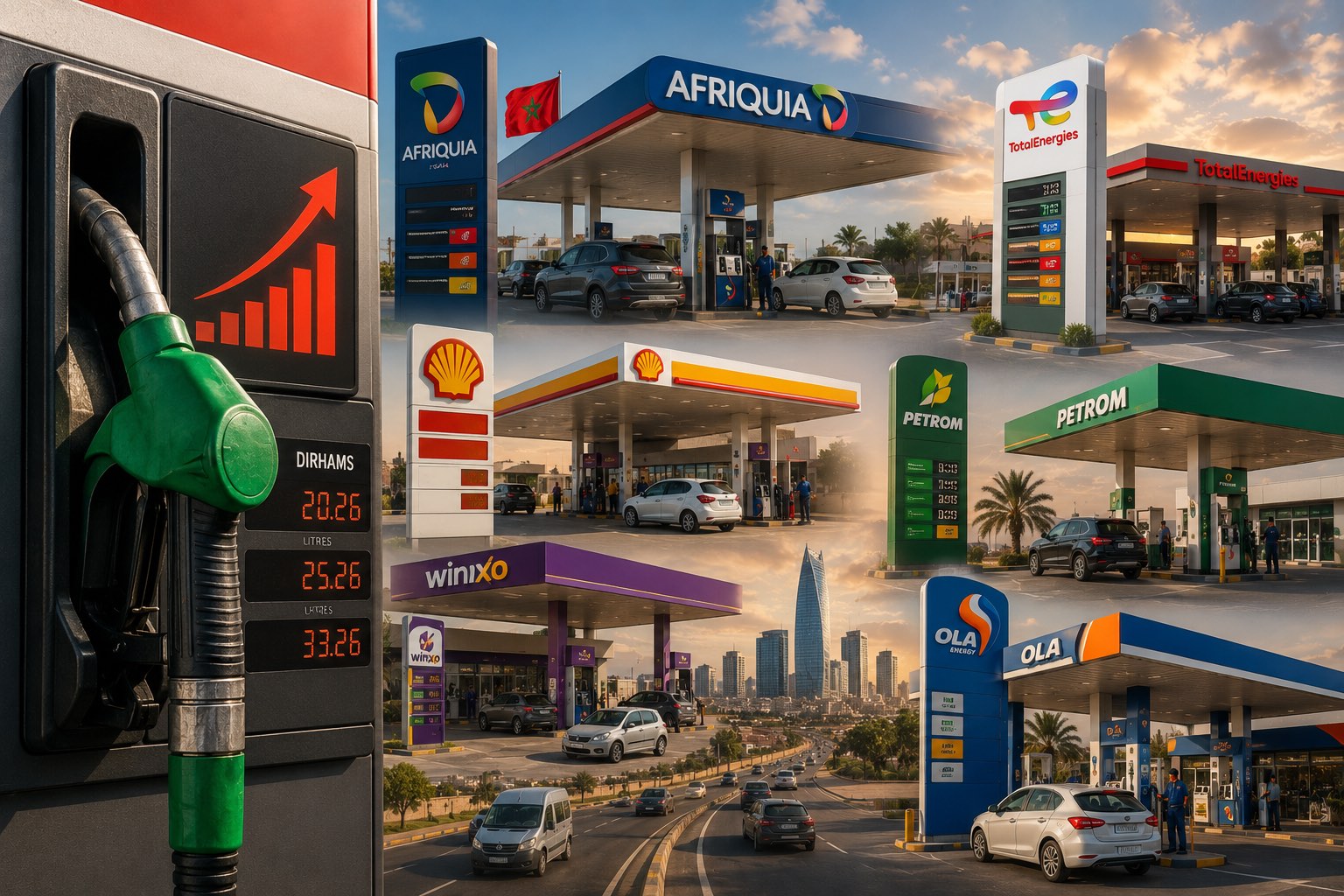
The increase in global oil prices has rapidly filtered through to Morocco’s domestic fuel market. Since 16 July 2026, fuel distributors have implemented a new upward revision in pump prices, ending three consecutive price reductions recorded earlier this summer. Diesel prices have increased by MAD 0.65 to MAD 0.70 per litre, bringing the national average to around MAD 13.30 per litre, compared with approximately MAD 12.61 previously. Meanwhile, premium gasoline has risen by MAD 0.38 to MAD 0.39 per litre, lifting the average retail price to approximately MAD 14.24 per litre, up from around MAD 13.85 before the latest adjustment. Actual prices may vary slightly depending on the fuel distributor and the region.
This latest increase comes only two weeks after the price reduction implemented on 1 July 2026, when diesel prices fell by MAD 0.96 per litre and gasoline by MAD 0.45 per litre. The recent reversal reflects the renewed rise in international crude oil and refined fuel prices, driven by persistent geopolitical uncertainty and heightened concerns over global energy supply chains.
As Morocco imports nearly all of its petroleum needs, domestic fuel prices remain highly sensitive to developments in international energy markets. Should geopolitical tensions persist and Brent crude remain above US$85 per barrel for an extended period, further increases in fuel prices cannot be ruled out in the coming weeks. Conversely, any easing of geopolitical risks or a decline in international crude prices could pave the way for greater price stability—or even renewed reductions—at Moroccan filling stations.