




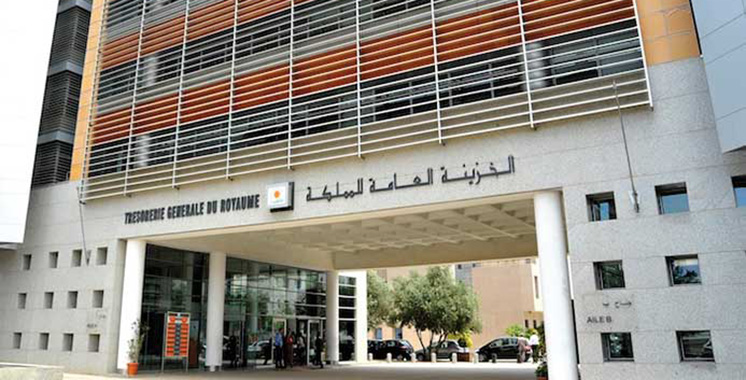
Morocco’s Treasury continues to demonstrate proactive and disciplined cash management by mobilizing MAD 18.2 billion through five money market placement operations, highlighting the government’s strategy to optimize public liquidity while maintaining stability in the domestic financial market. Beyond their technical nature, these transactions underscore the Treasury’s ability to efficiently manage short-term cash surpluses and strengthen the overall resilience of public finances.
Money market placement operations are a key instrument of Treasury cash management. They enable the government to temporarily invest excess liquidity with financial institutions, generate additional returns on idle public funds, reduce the overall cost of financing and contribute to balanced liquidity conditions within the banking sector. By actively managing daily cash flows, the Treasury is able to align available resources with the timing of tax revenues, public expenditures and debt servicing requirements.
The mobilization of MAD 18.2 billion also reflects the availability of substantial short-term liquidity within government accounts. These placements are generally conducted over short maturities, allowing the Treasury to recover funds quickly whenever financing needs arise. This flexible approach reduces the need for additional domestic borrowing while ensuring that sufficient resources remain available to meet the State’s financial commitments.
The operations come at a time when Morocco is implementing ambitious public investment programs, expanding social protection reforms and financing major infrastructure projects. In this environment, efficient treasury management has become increasingly strategic. Optimizing short-term liquidity helps lower debt-carrying costs, improves the return on public financial resources and reinforces investor confidence in the Kingdom’s fiscal management.
These transactions also highlight the sound functioning of Morocco’s money market, where liquidity exchanges between the Treasury, Bank Al-Maghrib and commercial banks contribute to financial stability and the smooth transmission of monetary policy. They form part of a broader public debt management strategy focused on diversifying funding sources, minimizing refinancing risks and optimizing borrowing costs.
Looking ahead, the continuation of this active liquidity management strategy is expected to support Morocco’s efforts to strengthen fiscal sustainability, improve public financial governance and enhance the resilience of its economy against global uncertainties. More than a routine financial transaction, the MAD 18.2 billion mobilized through five placement operations reflects the Treasury’s capacity to manage public cash flows efficiently while ensuring sustainable financing conditions for the Moroccan economy.