




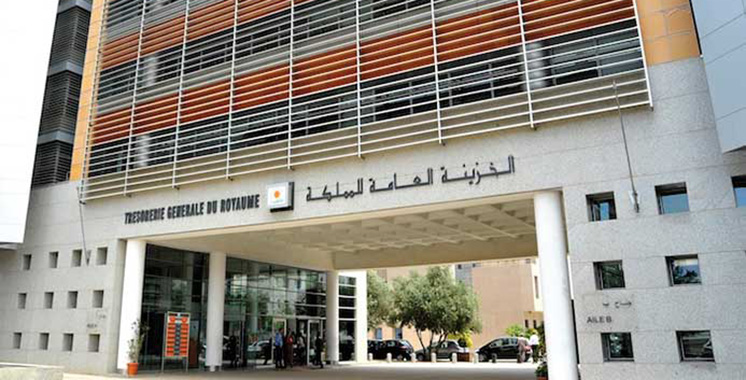

Morocco’s public finances recorded a broadly favorable performance at the end of July 2026, marked by higher government revenues, a reduction in the Treasury deficit and continued investment efforts. The latest data from the General Treasury of the Kingdom (TGR) point to strong growth in tax revenues while the State continues to finance major investments and strategic development projects.
Morocco’s public finances continued their positive trajectory during the first seven months of 2026. According to the latest data from the General Treasury of the Kingdom (TGR), ordinary revenues reached MAD 261 billion at the end of July, representing an 8.3% increase compared with the same period in 2025. This performance is an important indicator of the State’s ability to mobilize resources and also reflects the underlying momentum of economic activity.
The increase was particularly significant in tax revenues, which reached MAD 237.1 billion, up 12.9% year on year. Taxation therefore remains the main driver of public revenues, highlighting the importance of reforms implemented in recent years to improve tax collection, broaden the tax base and strengthen tax compliance.
The rise in revenues contributed directly to an improvement in the Treasury’s position. At the end of July 2026, the Treasury deficit stood at MAD 48.2 billion, compared with MAD 53.7 billion a year earlier. This represents an improvement of MAD 5.5 billion over one year. The development is particularly noteworthy given that the State continues to mobilize significant resources to finance public policies and major investment projects.
Meanwhile, the ordinary balance remained positive at MAD 4.5 billion, although this was significantly below the MAD 16.5 billion recorded at the end of July 2025. This decline reflects rising financing needs linked to public spending and major structural projects, despite the continued growth in ordinary revenues.
Another major indicator is the continuation of the public investment effort. Investment expenditure issued reached MAD 72 billion by the end of July, an increase of 10.2% compared with the first seven months of 2025. This rise reflects the government’s determination to maintain a high level of investment in infrastructure and strategic projects, at a time when public investment plays an important role in supporting growth and improving the country’s competitiveness.
This combination is particularly significant: the State is increasing its revenues, reducing its deficit and, at the same time, maintaining its investment effort. This reflects an attempt to reconcile fiscal consolidation with development financing. The challenge will be to preserve this balance over the medium and long term, particularly in view of growing needs related to infrastructure, social protection, water, energy and major territorial development projects.
The 12.9% increase in tax revenues is therefore an encouraging signal. It demonstrates that stronger mobilization of public resources can provide the State with greater room for maneuver to finance its priorities without relying exclusively on increased borrowing.
However, the analysis of public finances cannot be limited to the size of the deficit. The fundamental question also concerns the efficiency of public spending. Higher investment must translate into stronger productive capacity, greater competitiveness, more employment, increased exports and higher value added. In other words, every dirham invested should contribute as much as possible to strengthening Morocco’s sustainable growth potential.
The July 2026 figures therefore provide a relatively positive picture of Morocco’s fiscal trajectory. With MAD 261 billion in ordinary revenues, MAD 237.1 billion in tax revenues, a Treasury deficit reduced to MAD 48.2 billion and MAD 72 billion in investment expenditure, public finances demonstrate the capacity to mobilize additional resources while maintaining the development effort.
Beyond the figures, this evolution reflects an equation that has become central to Morocco’s economic policy: consolidating public finances without slowing strategic investment. The success of this trajectory will depend on the country’s ability to sustain revenue growth, control current expenditure and direct public investment toward sectors capable of generating stronger growth and greater value added over the long term.