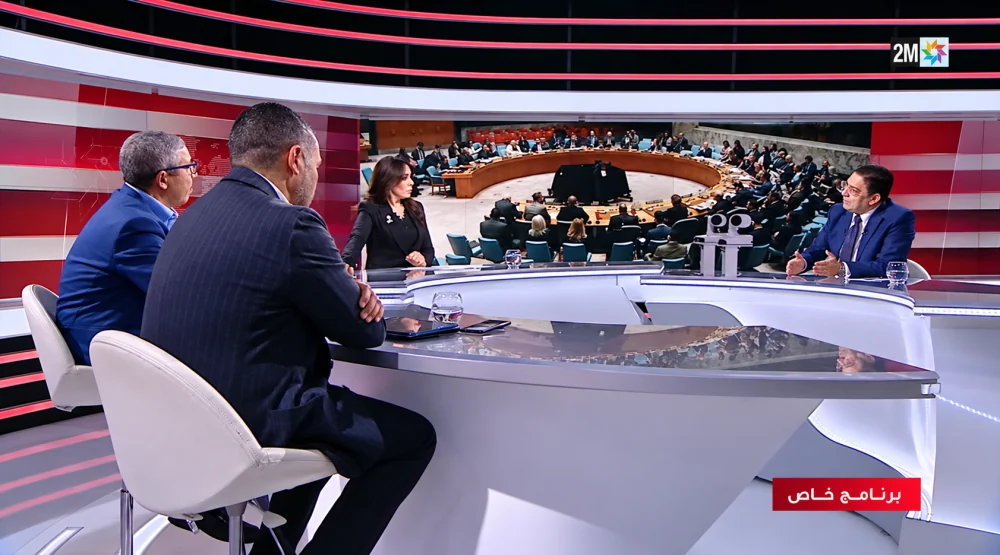
Russia’s veto did not catch Morocco off guard. The head of Moroccan diplomacy explained that Moscow had informed Rabat of its intentions and that exchanges had taken place between the two capitals ahead of the Security Council vote. Morocco therefore had a clear understanding of Moscow’s position and was able to anticipate the diplomatic implications of such a scenario.
Rabat intends to turn this veto into a strategic opportunity. Whereas a conventional interpretation might have viewed it as a setback for the US-backed initiative, Morocco considers that the non-renewal of MINURSO’s mandate opens a new chapter, making it possible to move beyond the repetitive cycle of discussions over the wording of resolutions and the duration of the mission’s mandate.
Regarding the operational implications, MINURSO’s departure is expected to be organised without any abrupt disruption. The mission, which has been present since 1991, is expected to withdraw its personnel, vehicles, equipment and other elements associated with its presence in the territory. However, the minister distinguished between the end of the mandate and immediate expulsion, stressing the importance of an organised transition in coordination with the United Nations.
From Morocco’s perspective, the end of MINURSO’s mandate does not mean the termination of the commitments associated with the 1991 ceasefire. Nasser Bourita stressed the need to distinguish between the monitoring mechanism and the political and legal commitment underpinning it, reaffirming Morocco’s commitment to stability and security in the region.
Morocco also seeks to move beyond the Security Council’s annual renewal cycle. For 35 years, the Sahara issue has been shaped by the recurring deadlines for renewing MINURSO’s mandate. The non-renewal of the mandate puts an end, for the time being, to this mechanism, without depriving the Security Council of its authority over the Sahara issue.
On the substance of the political settlement, Nasser Bourita reaffirmed the central role of Morocco’s Autonomy Initiative, presented in 2007. Moroccan diplomacy now considers that discussions should take place within the framework of autonomy under Moroccan sovereignty, rather than through open-ended negotiations involving several competing solutions. Morocco also intends to maintain the involvement of the four parties concerned in the political process, particularly Algeria.
The announced departure of MINURSO does not mean that Morocco intends to sever ties with the broader diplomatic framework of the United Nations. The UN Secretary-General’s Personal Envoy, Staffan de Mistura, retains a potential role in efforts to achieve a political settlement, although Rabat wishes to reassess the methods and conditions under which this mediation could continue.
Finally, the diplomatic focus is shifting towards the United Nations General Assembly. The Kingdom intends to translate international support for its position into action across various UN bodies, particularly the Fourth Committee, with the aim of turning the diplomatic gains accumulated in recent years into a transformation of the political process itself.