As the 2030 FIFA World Cup approaches, competition is intensifying among cities seeking to host the final of the tournament, which will be jointly organized by Morocco, Spain and Portugal. While Barcelona is positioning itself to stage football’s most prestigious match, Morocco is strengthening its bid through a combination of strategic advantages: the future 115,000-seat Hassan II Grand Stadium, modern infrastructure, growing experience in hosting major sporting events, and a geographical position connecting Europe and Africa. Casablanca is determined to turn these assets into a historic opportunity for Morocco and the African continent.
The race to host the 2030 FIFA World Cup final is entering a new phase. According to a report published by Spanish media outlet Tribuna Zamora on November 2, 2026, Barcelona is seeking to position itself as a potential host city for the tournament’s decisive match. This development adds a new dimension to the competition among major cities in the three host countries, particularly as Madrid and Casablanca also pursue their ambitions to stage this historic sporting event.
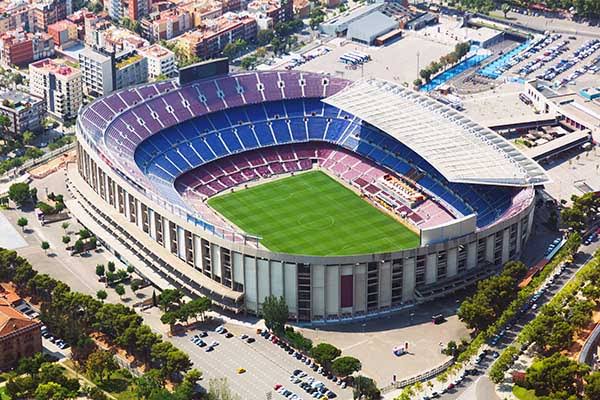
For Barcelona, hosting the final would represent an exceptional opportunity to strengthen its international sporting, economic and tourism profile. The Catalan capital enjoys global recognition, advanced infrastructure, an extensive transport network and a rich footballing tradition embodied by FC Barcelona. Madrid, meanwhile, is relying on the prestige of the Santiago Bernabéu Stadium, whose extensive modernization has transformed it into one of Europe’s most advanced sporting venues.
Casablanca Enters the Race with Major Strengths
Against Spain’s ambitions, Morocco possesses several strategic advantages that could strengthen its position in FIFA’s decision-making process. Foremost among them is the Hassan II Grand Stadium, currently under construction in Benslimane, within the metropolitan corridor connecting Casablanca and Rabat.
With a planned capacity of 115,000 spectators, the stadium is expected to become one of the largest football venues in the world.
Its significance extends beyond its exceptional seating capacity. The project features ambitious architectural design, modern facilities and dedicated infrastructure intended to accommodate spectators, sporting delegations, international media and commercial partners in accordance with international standards.
The stadium is among Morocco’s most emblematic sporting investments, reflecting the Kingdom’s determination to establish itself as a leading destination for major international competitions.
Organizational Experience Strengthens Morocco’s Credentials
Morocco’s experience in organizing international sporting events represents another major competitive advantage.
The Kingdom has hosted several prestigious competitions, including the FIFA Club World Cup in 2013, 2014 and 2022, the Women’s Africa Cup of Nations in 2022 and 2024, and the men’s Africa Cup of Nations in 2025.
These tournaments have helped Morocco develop expertise in sporting security, logistical management, transportation, international hospitality and the coordination of large-scale events.
Morocco’s historic performance at the 2022 FIFA World Cup in Qatar has further strengthened its international sporting reputation.
By becoming the first African and Arab national team to reach the World Cup semifinals, the Atlas Lions significantly enhanced Morocco’s global visibility and reinforced the country’s standing within international football.
Modern Infrastructure and a Strategic Geographic Location
Another major Moroccan advantage lies in the continuous modernization of its infrastructure and transport networks.
Over recent years, the Kingdom has invested heavily in expanding its motorway system, upgrading airports and strengthening railway connectivity, including the high-speed rail link between Tangier and Casablanca and the planned extension toward Marrakech.
These investments are expected to facilitate the movement of supporters, national teams and official delegations throughout the tournament while improving connectivity between Morocco’s host cities.
Casablanca’s Mohammed V International Airport also represents a significant asset. As the Kingdom’s main aviation hub, it connects Morocco to numerous destinations across Europe, Africa, the Americas and the Middle East, benefiting particularly from Royal Air Maroc’s international network.
Morocco’s geographical proximity to Europe provides an additional competitive advantage. Located only a few hours by air from major European capitals, the country occupies a strategic position along commercial and tourism routes linking Africa, Europe and the Atlantic.
These strengths are complemented by the tourism capacity of Casablanca, Rabat, Marrakech, Tangier, Agadir and Fez, alongside ongoing investments in hotels, hospitality services and urban infrastructure.
A Historic World Cup Final for Africa
Morocco’s ambition carries a symbolic and diplomatic significance extending far beyond football.
Hosting the final in Casablanca would represent a historic milestone for Africa, which has never staged the final match of a men’s FIFA World Cup, despite South Africa’s successful organization of the tournament in 2010.
Selecting Morocco would strengthen Africa’s position in international football and provide another opportunity to demonstrate the continent’s organizational, economic and human potential.
This ambition also aligns with Morocco’s broader strategy of using sport as an instrument of economic diplomacy, international cooperation and investment promotion.
The 2030 World Cup could therefore become a powerful platform for consolidating Morocco’s influence across Africa while projecting its image as a country capable of connecting markets, cultures and development opportunities.
Casablanca Leverages Its Economic Strength
Casablanca’s economic importance represents another argument supporting Morocco’s ambitions. As the Kingdom’s leading financial, industrial and commercial center, the city hosts the headquarters of major corporations, financial institutions and international businesses.
Hosting the World Cup final could generate significant opportunities for tourism, hospitality, transportation, retail, telecommunications and industries associated with major sporting events.
The Hassan II Grand Stadium could also serve as a catalyst for territorial development in Benslimane and surrounding areas by attracting new investments, stimulating commercial activity and encouraging improvements in public infrastructure.
From an economic perspective, the central challenge is to transform sporting investments and associated infrastructure into productive assets capable of generating added value, employment and sustainable economic activity long after the tournament concludes.
The World Cup also offers Morocco an opportunity to accelerate urban modernization, improve international accessibility and strengthen the competitiveness of its tourism and service industries.
FIFA Will Have the Final Say
Despite Morocco’s considerable strengths, competition with Spanish cities remains intense. Barcelona and Madrid possess extensive experience in hosting major international events, supported by powerful tourism industries, advanced logistics networks and internationally recognized sporting infrastructure.
The final decision will rest with FIFA, which must assess technical, organizational, security and commercial requirements, as well as stadium readiness, transport systems and hospitality facilities. As of November 2, 2026, FIFA has not officially announced which city will host the 2030 World Cup final.
For Morocco, the strength of its bid lies in the combination of several major advantages: the Hassan II Grand Stadium, modern infrastructure, international air and rail connectivity, organizational expertise, economic dynamism and the historic significance of staging a World Cup final on African soil.
Against the ambitions of Barcelona and Madrid, Casablanca is therefore defending much more than a monumental sporting venue. It represents the vision of a Kingdom determined to transform the 2030 FIFA World Cup into a catalyst for economic development, a platform for international influence and a historic opportunity to place Africa firmly at the heart of the world’s greatest sporting events.