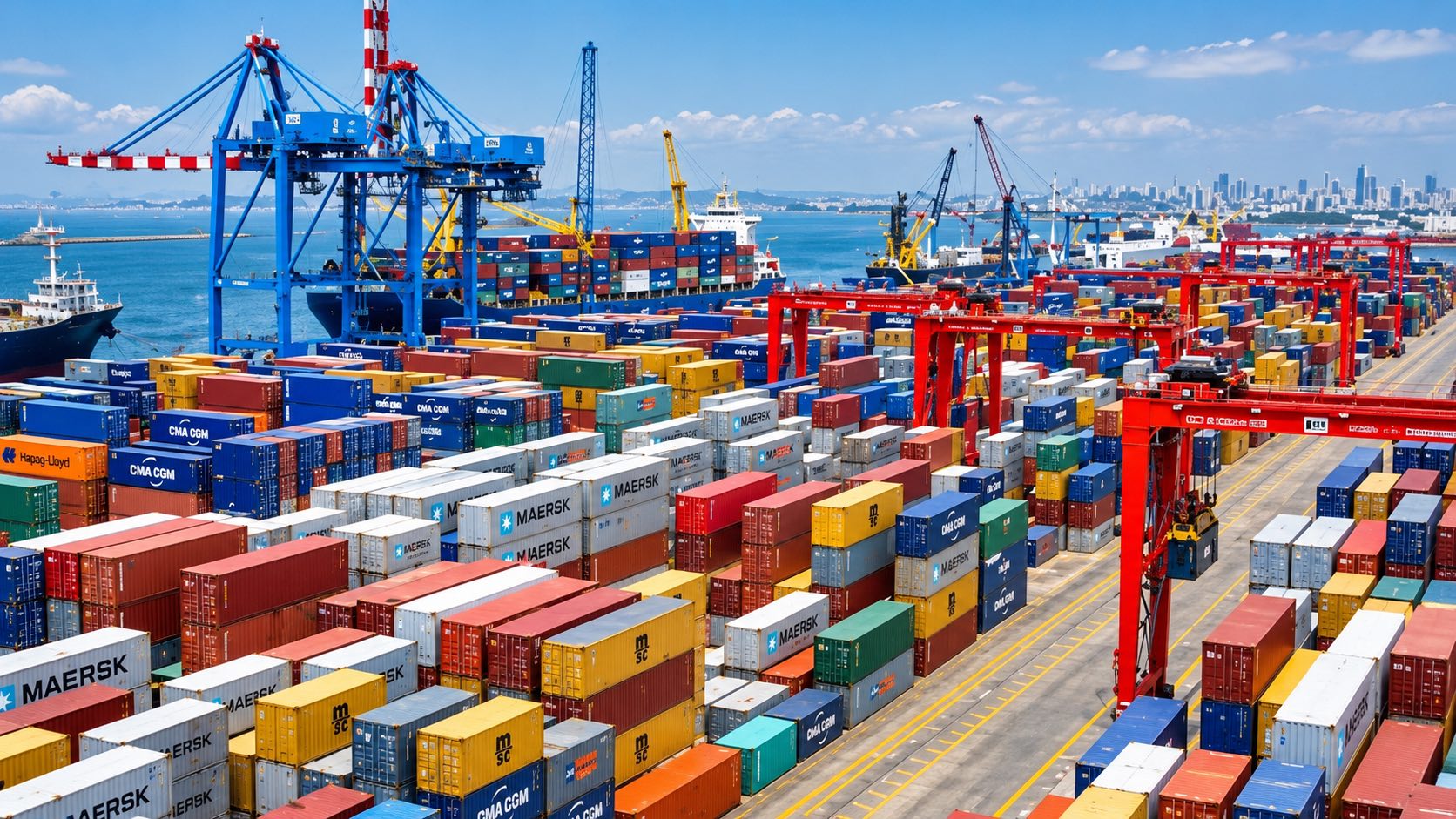

From November 12 to 14, 2026, Benin will host TLC 2026, a major event dedicated to transport, logistics, and international trade. Bringing together shippers, freight forwarders, transport operators, shipping companies, port authorities, customs administrations, banks, and insurance providers, the event aims to support Cotonou’s transformation into a regional logistics hub.
Beyond professional networking, the strategic objective is to strengthen the competitiveness of West African trade corridors, facilitate cross-border exchanges, and consolidate Benin’s position within continental supply chains.
As African economies undergo significant changes in trade patterns, infrastructure development, and regional integration, logistics has become a decisive factor in economic competitiveness. Benefiting from its strategic location on the Gulf of Guinea and its connections to landlocked markets, Benin intends to capitalize on these developments to establish itself as one of West Africa’s leading commercial gateways.
TLC 2026, scheduled for November 12–14, forms part of this broader ambition. Over three days, the event will bring together stakeholders across the logistics value chain to address transportation, freight forwarding, trade finance, customs facilitation, and infrastructure development.
At the center of this strategy stands the Port of Cotonou, a vital infrastructure asset for Benin’s economy and regional trade. Its importance extends well beyond national borders, serving as a maritime gateway for several landlocked countries, including Niger, Burkina Faso, Mali, and Chad, although the actual use of these corridors depends on political, security, and commercial conditions.
For these economies, access to seaports is essential to maintaining supply chains, controlling transportation costs, and ensuring reliable trade flows. Port efficiency, transport availability, and customs performance directly influence final product prices, delivery schedules, and business competitiveness.
A Regional Cooperation Platform to Strengthen Economic Integration
One of TLC 2026’s principal strengths lies in its ambition to bring together public and private stakeholders involved in the international movement of goods. This integrated approach reflects a fundamental economic reality: logistics performance depends not only on modern port infrastructure but also on effective coordination among all participants in the supply chain.
For importers and exporters, direct engagement with freight forwarders, transport companies, and shipping operators offers opportunities to identify solutions that improve cost efficiency, delivery times, and operational reliability. For financial institutions and insurance providers, the event creates a platform to explore trade financing, risk coverage, and the security of commercial transactions.
Institutional cooperation will also play a central role. Simplifying administrative procedures, accelerating digital transformation, connecting information systems, and improving transparency are essential measures for reducing border delays and logistics costs.
In an increasingly competitive regional environment, Cotonou faces strong competition from other major maritime gateways, including Lomé, Abidjan, and Tema, which are also seeking to capture trade flows serving West Africa’s inland markets. Service quality, corridor reliability, and competitive pricing will be decisive in attracting and retaining international logistics operators.
For Benin, the ambition to become a logistics hub forms part of a broader economic diversification strategy aimed at expanding services, attracting investment, and maximizing the advantages of its geographical position.
Potential economic benefits extend across road transportation, warehousing, port services, insurance, banking, logistics technologies, and industrial activities connected to international trade.
TLC 2026 could also help strengthen commercial relations between coastal economies and landlocked countries at a time when efficient regional trade is increasingly important for supply security, economic resilience, and market development.
Beyond the stated ambitions, the success of this initiative will depend on the ability of participating stakeholders to transform professional discussions into operational partnerships, concrete investments, and measurable improvements in logistics performance.
A Second Edition with Growing Regional Ambitions
According to information released around the October 13 press conference, the second edition of TLC 2026 will take place at the Palais des Congrès in Cotonou, with approximately 1,000 professional visitors and 45 exhibitors expected, compared with more than 350 visitors and 12 exhibitors at the inaugural edition in 2025.
The announced theme, “Corridors, Port, Digital: Building Together Seamless and Reliable Logistics in West Africa,” reflects the organizers’ determination to position the event as a regional platform for dialogue, business development, and practical solutions.
This anticipated expansion illustrates the growing importance of logistics cooperation in West Africa, where efficient transport corridors are becoming increasingly critical to trade competitiveness and economic integration.
By hosting TLC 2026, Benin seeks to position Cotonou as more than a transit port: a comprehensive center for logistics services, commercial connectivity, and value creation across West Africa. If supported by sustained investment, institutional coordination, and improved corridor performance, this ambition could progressively reshape the region’s logistics landscape.