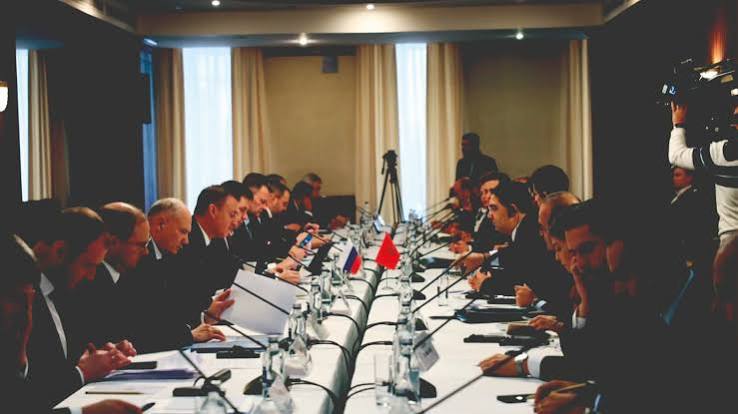
The Russia–Africa Summit, held in Moscow on October 28–29, 2026, opens new prospects for strengthening economic and industrial cooperation between Morocco and Russia. Against a backdrop of shifting international partnerships and growing efforts to diversify markets, technologies, and investment sources, the summit offers Moroccan manufacturers an opportunity to move beyond conventional trade relations toward productive partnerships based on technology transfer, local manufacturing, and deeper integration into African and global industrial value chains.
This momentum comes as Morocco seeks to expand its network of economic partners and capitalize on potential synergies between its industrial and logistics capabilities and Russian technological expertise in strategic sectors, including mechanical engineering, metallurgy, chemicals, energy, and agribusiness.
According to estimates released by the Russian Trade Representation in October 2026, bilateral trade stands between $1.5 billion and $2 billion. Trade between the two countries reportedly increased by nearly 30% during the first half of 2025 compared with the same period a year earlier.
However, bilateral trade remains structurally imbalanced in Russia’s favor. During the first half of 2025, Moroccan imports from Russia reached approximately MAD 2.73 billion, while Moroccan exports to the Russian market amounted to just MAD 559 million, resulting in a trade deficit of nearly MAD 2.17 billion.
These figures highlight the need to reshape economic cooperation by encouraging joint industrial investment and increasing the added value of Moroccan exports to Russia.
Industrial Complementarities Create Investment Opportunities
Russia possesses significant expertise in metallurgy, mechanical engineering, chemicals, energy equipment, and agricultural technologies. Morocco, meanwhile, benefits from established industrial ecosystems, competitive logistics infrastructure, and a strategic geographical position connecting European, African, and Mediterranean markets.
These complementary strengths could support partnerships in industrial equipment manufacturing, local machinery assembly, maintenance services, mechanical engineering, technical training, and technology transfer.
In the chemicals and fertilizers sector, opportunities exist to combine Morocco’s phosphate industry capabilities with Russian expertise in chemical raw materials and industrial inputs. Such cooperation could contribute to improving production processes, advancing applied research, and manufacturing higher-value products.
Agribusiness also offers promising opportunities, particularly in agricultural machinery, refrigeration technologies, food processing, storage infrastructure, and preservation systems.
Technology Transfer Must Drive Future Partnerships
Technology transfer represents one of the most important priorities for Moroccan industrial companies. Cooperation should extend beyond importing machinery and finished products to acquiring industrial know-how, localizing technologies, and developing national technical expertise. The partnership between Moroccan pharmaceutical company Sothema and Russian biotechnology group Biocad illustrates the potential of this approach.
Their cooperation contributed to the development of a biotechnology-based cancer treatment manufacturing facility in Bouskoura, inaugurated in 2019 following an announced investment of MAD 200 million.
This experience could inspire similar initiatives in mechanical engineering, electrical equipment, advanced materials, and industrial production technologies through agreements combining joint investment, local manufacturing, and specialized training.
Institutional cooperation also provides a foundation for further development. The eighth session of the Morocco–Russia Joint Commission, held in October 2025, helped strengthen economic dialogue and explore measures to facilitate trade and customs procedures.
Morocco as an Industrial Gateway to Africa
The African dimension adds strategic significance to Morocco–Russia cooperation, particularly as trade between Russia and African countries exceeded $27 billion in 2025, according to figures released by Russian authorities.
Within this framework, Morocco could leverage its geographical location, industrial infrastructure, and port facilities to attract joint investments targeting African markets.
Industrial zones in Tangier, Kenitra, Casablanca, Jorf Lasfar, and Nador could offer suitable locations for joint ventures in mechanical engineering, chemicals, food processing, and industrial equipment manufacturing.
Establishing production facilities that combine Russian capital and technical expertise with Moroccan industrial capabilities could strengthen export-oriented value chains, create skilled employment, and increase local industrial integration.
However, realizing these opportunities will require careful consideration of international sanctions, financial compliance requirements, payment mechanisms, logistics costs, and trade regulations.
Turning Trade Relations into Productive Investment
To capitalize on emerging opportunities, Moroccan industrial stakeholders will need a structured approach based on identifying priority sectors, selecting reliable partners, developing commercially viable projects, and negotiating clear commitments regarding technology transfer, local production, and workforce development.
The General Confederation of Moroccan Enterprises (CGEM), industrial federations, and investment promotion agencies could play a central role by organizing sector-specific business missions, facilitating business-to-business meetings, and supporting companies seeking partnerships with Russian counterparts.
Such initiatives should also aim to increase Moroccan manufactured exports, reduce the bilateral trade imbalance, and expand joint investment rather than merely stimulate additional imports.
The true economic value of cooperation between Rabat and Moscow will ultimately depend on its ability to generate new productive activities, strengthen Morocco’s industrial capabilities, and improve the competitiveness of domestic companies in international markets.
The Russia–Africa Summit could therefore represent an important opportunity to reshape Morocco–Russia economic relations around a more balanced and productive partnership. For Moroccan manufacturers, the challenge is to translate industrial complementarities into concrete investments, technological capabilities, and sustainable business opportunities.
By prioritizing industrial investment, technology transfer, and expansion into African markets, Morocco could reinforce its position as a regional manufacturing platform while strengthening its integration into global industrial value chains.