
Morocco continues to consolidate its position as a strategic market in European aviation. Irish low-cost carrier Ryanair has announced a record winter 2026 schedule, offering 5.3 million seats across 156 routes, including 17 new connections. This expansion highlights the growing attractiveness of the Moroccan market and opens new opportunities for tourism, regional investment and international connectivity as the Kingdom advances its economic and tourism ambitions ahead of 2030.
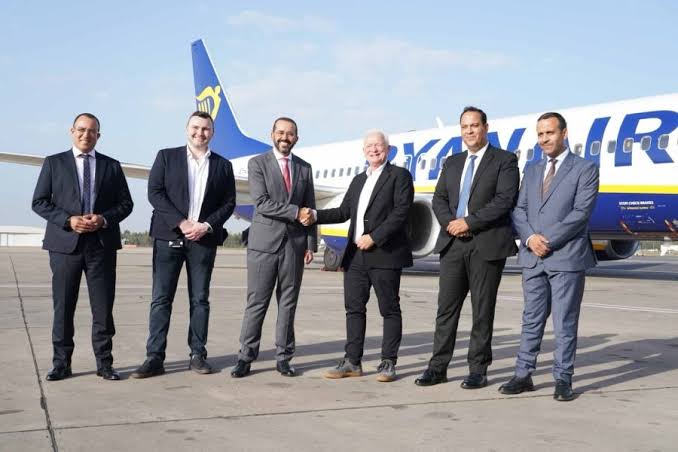
Morocco’s aviation sector is entering a new phase of expansion following Ryanair’s announcement of an unprecedented winter flight programme, unveiled on October 27 in Rabat during a visit by the airline’s Chief Executive Officer, Eddie Wilson. The schedule represents a 12% increase in capacity compared with the previous winter season, equivalent to approximately 580,000 additional seats. Overall, the airline plans to offer 5.3 million seats across 156 routes, including 17 new services, connecting 13 Moroccan airports with 14 countries.
This expansion confirms Morocco’s growing importance within Ryanair’s international network. It comes amid strong tourism momentum, efforts to diversify source markets and improvements in regional accessibility, alongside preparations for the 2030 FIFA World Cup, which Morocco will co-host with Spain and Portugal.
Rabat Becomes Ryanair’s Fifth Base in Morocco
One of the most significant developments is the strengthening of Ryanair’s operations in Rabat, which has become the airline’s fifth operational base in Morocco. With the addition of two aircraft, the carrier’s Morocco-based fleet now totals 16 planes, representing, according to the company, a cumulative investment of $1.6 billion and supporting more than 8,500 local jobs.
The new programme includes connections between Rabat and Stockholm or Kraków, Marrakech and Wrocław, as well as additional routes linking Agadir to several European cities, including Milan, Nuremberg, Bratislava and Gdańsk. Other Moroccan destinations, such as Fez, Tetouan, Essaouira, Ouarzazate, Dakhla and Nador, are also expected to benefit from the expansion of the airline’s network.
Beyond increasing flight frequencies, this development creates opportunities to distribute the economic benefits of international tourism more evenly across Morocco’s regions. Improved accessibility could help emerging destinations attract visitors and investment while reducing the traditional concentration of tourist flows in the country’s major urban and coastal centres.
Air Connectivity as a Driver of Tourism and Regional Growth
Expanding international air connections has become a central pillar of Morocco’s tourism competitiveness. Accessibility, route diversity and affordable fares play a decisive role in attracting international visitors, investors and business travellers.
Stronger air connectivity can facilitate travel for foreign tourists, Moroccans living abroad and business professionals, while generating additional economic activity across hospitality, restaurants, retail, ground transportation and tourism-related services.
This momentum is particularly important for regions with significant tourism and economic potential that have historically faced limited direct international connections. Each new route can become a gateway for attracting visitors and investment, provided that destinations offer adequate infrastructure, quality services and competitive tourism products capable of generating local economic value.
Ryanair’s expansion also aligns with the efforts of the Moroccan National Tourism Office to strengthen international connectivity, diversify tourism source markets and increase the visibility of Moroccan destinations across European aviation networks.
Profitability and Economic Impact Remain Key Challenges
Despite the positive outlook, increasing airline capacity does not automatically translate into proportional growth in tourism revenues. The actual economic impact will depend on several factors, including aircraft occupancy rates, average length of stay, visitor spending patterns and the ability of destinations to provide competitive services.
Fluctuations in fuel prices, rising operating costs and intensifying competition among airlines could also affect the profitability of certain routes and influence ticket pricing strategies.
These challenges highlight the importance of continued investment in airport modernisation, passenger services and ground transport connections linking airports to urban centres, tourism destinations and regional economic hubs.
For Morocco, the strategic objective extends beyond attracting additional low-cost airlines. It involves developing an integrated aviation and tourism ecosystem capable of turning improved connectivity into regional development, productive investment and sustainable economic growth.
Morocco Strengthens Its Position on the International Aviation Map
As the 2030 FIFA World Cup approaches, air transport is becoming increasingly important to Morocco’s ability to accommodate growing visitor flows and strengthen the international integration of its regions. Ryanair’s record winter schedule reflects the airline’s confidence in Morocco’s market potential, supported by tourism demand, infrastructure development and broader economic growth prospects.
However, the ultimate success of this expansion will be measured by Morocco’s ability to convert additional airline capacity into sustained visitor growth, a more balanced distribution of tourism revenues, job creation and productive regional investment.
The challenge will be to ensure that the benefits of improved connectivity extend beyond major tourism destinations and contribute to the emergence of new regional economic centres.
With 5.3 million seats scheduled and 17 new routes, Ryanair is doing more than expanding its commercial presence in Morocco. The airline is contributing to a broader transformation of the Kingdom’s international connectivity, strengthening its position as a tourism and investment destination while establishing aviation as a strategic pillar of Morocco’s economic development ambitions towards 2030.