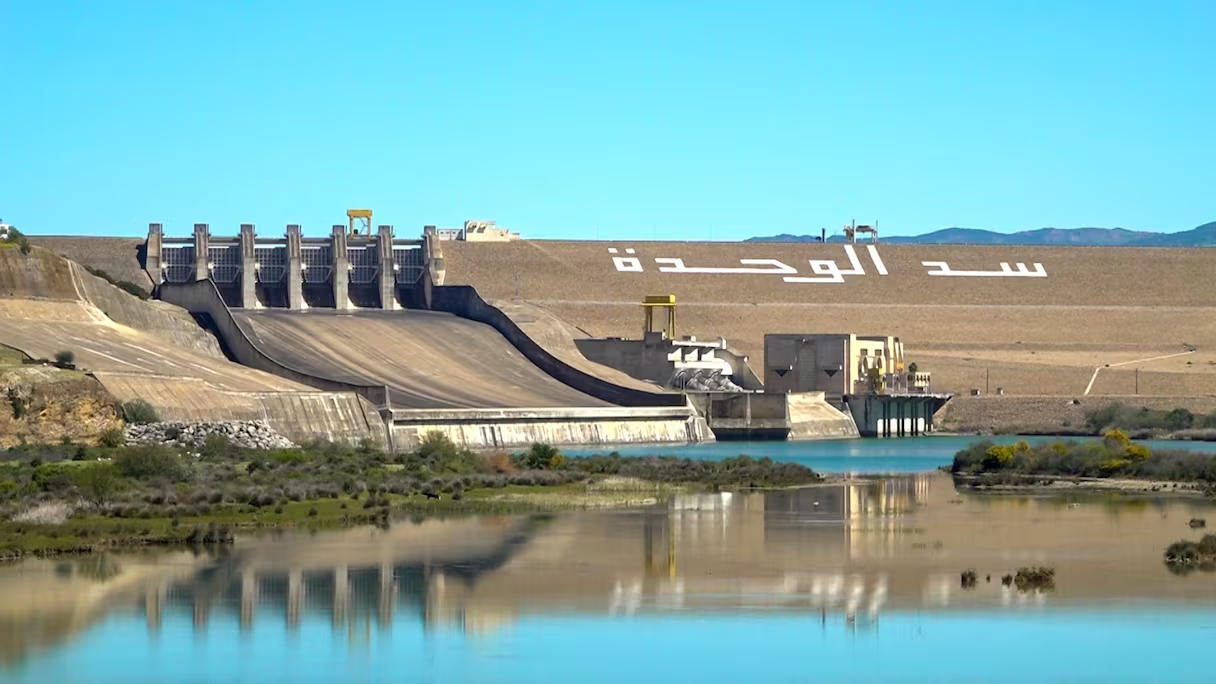
Morocco is taking another major step in financing its strategic infrastructure through a partnership involving the government, the Mohammed VI Investment Fund, Taqa Morocco, Nareva, and the National Office of Electricity and Drinking Water. The agreement covers an investment program worth nearly MAD 130 billion in the water and energy sectors. The initiative comes amid rising energy demand, growing water security challenges, and the need to mobilize additional private capital to support the Kingdom’s economic transformation.
Morocco aims to strengthen the foundations of its energy and water sovereignty by accelerating structural projects in two sectors essential to its economic competitiveness. The partnership bringing together several public and private stakeholders around an investment program approaching MAD 130 billion reflects this strategic direction at a time when infrastructure development is becoming increasingly important for industrialization and investment.
Information contained in the report on public establishments and enterprises accompanying the 2027 Draft Finance Law highlights the growing role of the Mohammed VI Investment Fund in financing national priorities. The Fund continues to expand its intervention mechanisms to stimulate productive investment and encourage greater private-sector participation.
The Fund’s financial commitments are expected to reach MAD 8.8 billion in 2026, while cumulative disbursements are estimated at MAD 2.1 billion. These projections reflect the gradual expansion of its activities, based on capital mobilization and the development of financing instruments tailored to business needs.
The partnership established with Taqa Morocco, Nareva, and the National Office of Electricity and Drinking Water represents one of the most significant examples of this strategy. The announced investment package of nearly MAD 130 billion covers all projects included in the agreement and does not represent the Fund’s financial commitments alone.
Water and Energy: Two Pillars of Industrial Competitiveness
Securing reliable water and electricity supplies has become a fundamental condition for Morocco’s industrial attractiveness. The growing number of manufacturing projects, the expansion of industrial zones, and increasing urban demand require continuous modernization of production and distribution infrastructure.
In the energy sector, the challenge is to meet rising demand while diversifying supply sources. Strengthening generation capacity and electricity infrastructure is expected to improve energy security and support the Kingdom’s industrial ambitions.
Water security occupies an equally strategic position. Against a backdrop of climate pressures and growing demand from productive sectors, developing infrastructure for water mobilization, treatment, and distribution is essential to ensuring the continuity of economic activity.
Private-sector participation in these projects also reflects an evolution in infrastructure financing mechanisms. In a context of budgetary constraints, structured partnerships can help distribute risks, accelerate investment, and mobilize additional financial resources.
At the same time, the Mohammed VI Investment Fund continues to develop initiatives supporting Moroccan businesses. An initial pilot operation launched in June 2026 involves 22 companies from the Kingdom’s twelve regions. It aims to improve their access to equity and quasi-equity financing.
For 2027, the Fund is preparing a new generation of investment vehicles designed to increase the leverage effect of public capital on private investment. This approach could help diversify corporate financing sources and support the emergence of new industrial projects.
Beyond the scale of the announced funding, the success of this strategy will depend on the ability to deliver projects on schedule, control costs, and generate sustainable economic benefits. For Morocco, water and energy are no longer merely basic infrastructure services; they have become decisive instruments of economic sovereignty, industrial competitiveness, and regional attractiveness.